PUBLIC HEALTH | NEWS
City health officials named four priorities for the next improvement plan and introduced the New Orleans Health Atlas, a free map-based tool that breaks data down to the neighborhood and census tract.
By Kim M. Braud | November 17, 2026
NEW ORLEANS - The City of New Orleans released its latest Community Health Assessment on Tuesday and launched the New Orleans Health Atlas, a free public website that maps health and social conditions across the city's 72 neighborhoods, 181 census tracts, 18 ZIP codes and five City Council districts.
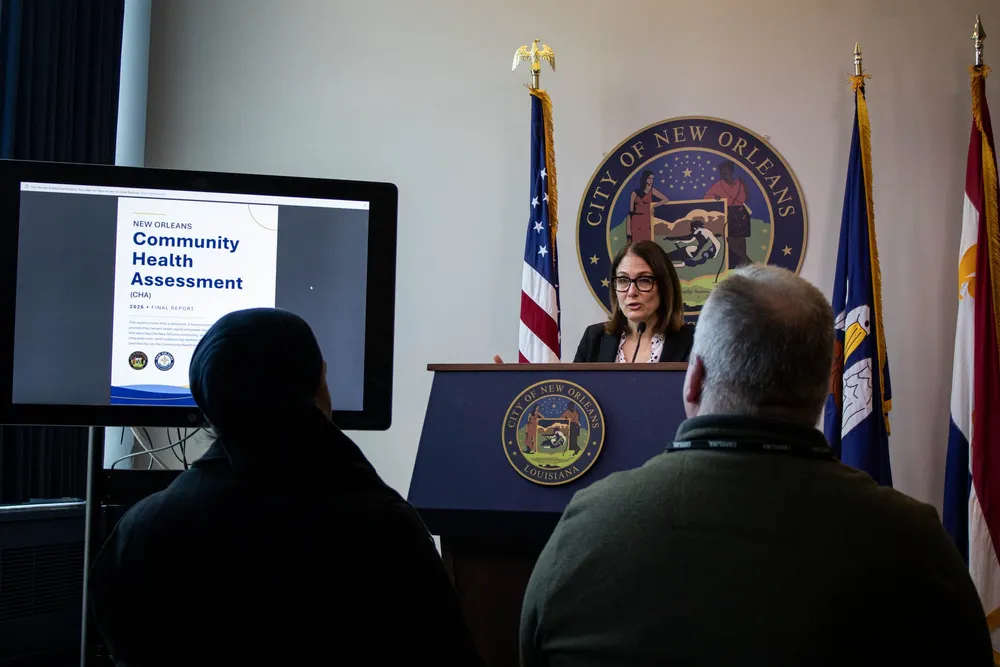
Officials from New Orleans Health and Human Services presented both at a media briefing and hands-on training in the City Hall press room on Nov. 17. Dr. Jennifer Avegno, Deputy Mayor for Health and Human Services and the City's chief medical officer, said the format was new for the department. Instead of a standard press conference, reporters were walked through the tool and invited to use it.
"Statistics can tell us a lot, but it's really so much more than that," Avegno said. She described the goal as understanding why some communities in the city persistently have better health outcomes than others.
The assessment, known as the CHA, identifies four priority areas that will shape the City's next Community Health Improvement Plan, or CHIP:
- Access, connection, and support
- Behavioral health
- Economic stability
- Reproductive, maternal, and child health
Avegno said the four are not ranked.

How the priorities were chosen
The department conducts a community health assessment about every five years. Avegno noted the previous one launched about two weeks before COVID-19 reached the city.
Dr. Flint Mitchell, Deputy Director for Community Engagement, Performance, and Equity, said the department partnered with the Louisiana Public Health Institute for community outreach. The process included more than 1,000 resident surveys, 25 key informant interviews and six focus groups with specific populations, among them Black men and fathers and youth. Mitchell said the department also surveyed nearly 70 community partners about assets and resources.
Those responses were compared against large public data sets, including CDC WONDER and the U.S. Census. The City's published fact sheet lists 16 local and national data sources. Mitchell said the work produced 14 themes, which were taken back to residents and to subject matter experts to narrow down to four.
Mitchell drew a distinction between the two products. "The report is not a research study," he said. He described the CHA as an assessment used to set priorities for the next three years or more, and the Atlas as a resource for exploring the underlying data.
What changed since the last assessment
The previous cycle, which ran through the 2022 to 2025 improvement plan, centered on access to care, economic stability and community safety. Behavioral health and maternal and child health were sub-priorities then.
Asked by a reporter how the city's health has changed since the 2019 assessment, Avegno said the most entrenched challenges have not moved. Poverty, income inequality, food security and housing instability "were problems five years ago; they remain problems," she said.
The largest shift, she said, was community safety. That category, which covered both violent injury and public health threats such as COVID-19, did not rise into the top themes this time. Avegno said the same pattern appeared at the mayor's budget town halls and that it reflects residents "feeling safer." She said the Office of Violence Prevention remains active.
On behavioral health, Avegno said the earlier plan leaned toward opioids at the height of that crisis. What surfaced this time was broader mental health support, including anxiety, depression and serious mental illness. Addiction remains included.
"Public health is a ground game. You can make policies all you want, but if it doesn't get to the people on the ground, then it's not worth it." Dr. Jennifer Avegno
Inside the Health Atlas
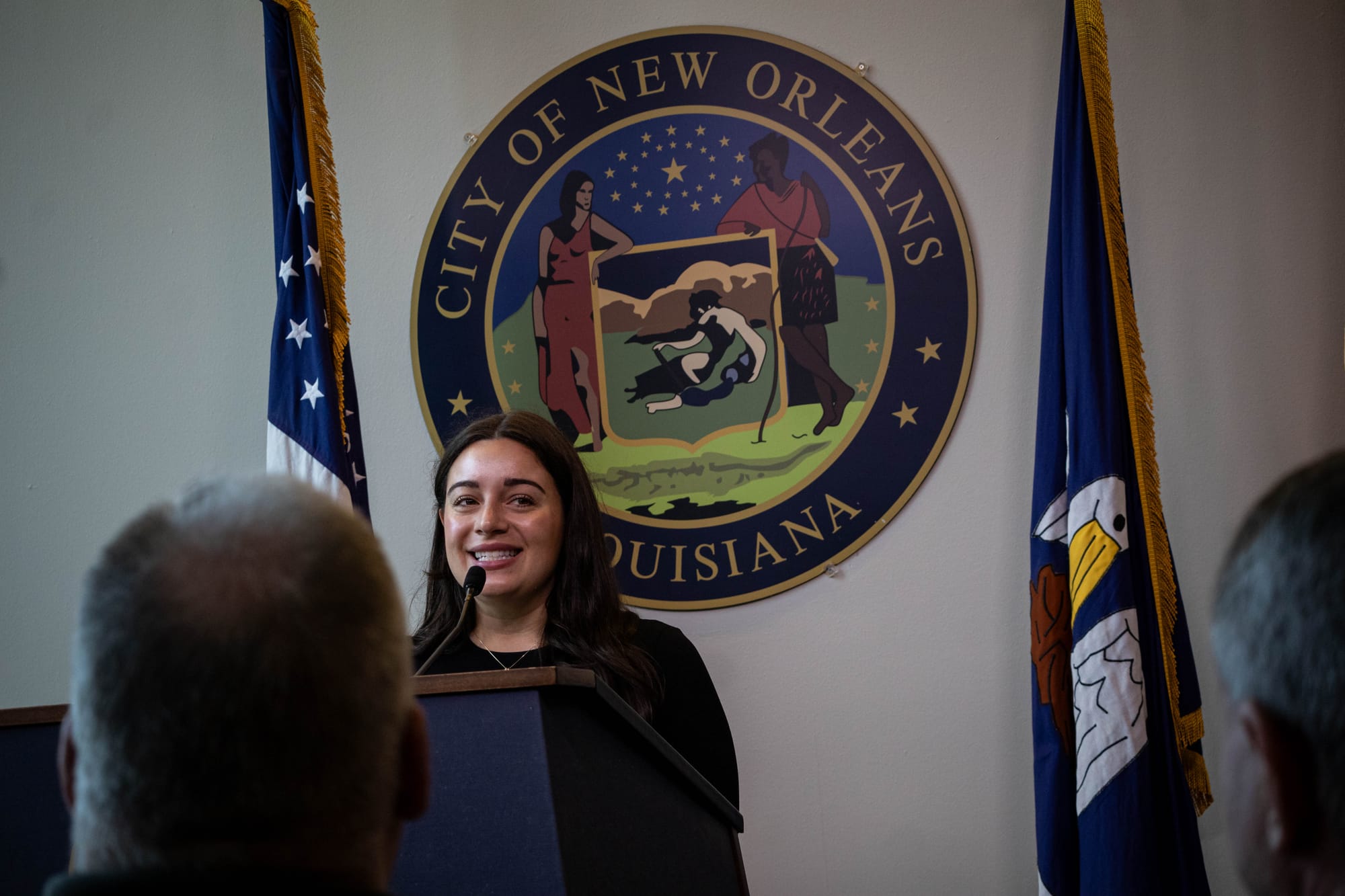
The Atlas was built with Metopio, a community health data platform used by health departments and hospitals. Tasia Gorski, who presented for Metopio with colleague Kirk Giandoloni, said the site organizes 141 topics into four themes: demographics, behaviors and exposures, social determinants of health, and health outcomes.
Each topic carries its definition, time period, available breakdowns and source data set. Users can switch the map among parish, neighborhood, census tract, council district and ZIP code layers, rank areas against one another, compare two topics side by side and download both map images and raw data as Excel files.
Gorski demonstrated three indicators: residents living below 200 percent of the federal poverty level, SNAP participation and birth rate. She said the 200 percent measure captures households that earn too much to count as poor but still cannot cover basic costs.
Avegno used the birth rate map to show how the department intends to apply the data. Higher birth rates appear in New Orleans East and on the West Bank, she said, and the department can check that against uptake of programs such as its universal postpartum home visiting program.
She said the same overlap of high poverty, high SNAP use and high birth rates is why New Orleans East is the focus for a possible Rx Kids pilot. Rx Kids is a cash transfer program for pregnant people and new parents that began in Flint, Michigan.
The data is also guiding a new grant-funded hire. Avegno said the department brought on a benefits coordinator "whose whole job is to try and prevent people from falling off of SNAP and WIC and Medicaid," and the Atlas will show her which neighborhoods need the most time.
Limits of the data
Officials were direct about what the Atlas will not do. Asked how current it is, Avegno said update frequency depends on each source. CDC data may refresh monthly, quarterly or yearly, and new releases feed in automatically.
Not every topic is available at every level. Vaccination rates, Avegno said, are generally available only at the parish level. Infectious disease cases such as flu, measles and COVID-19 are reported through the Louisiana Department of Health, which typically releases location only by region to avoid identifying families. Gorski said breakdowns such as race, ethnicity and age also vary by topic.
Hospital and clinical records are not part of the Atlas. Avegno said a separate clinical data tool run by the Louisiana Public Health Institute is being used in maternal and child health work but is not public.
She called the launch a beta. The platform initially confused parishes with counties, she said, and residents who spot something that looks wrong are asked to report it.
Asked whether newsrooms may use Atlas maps in print, broadcast and online stories, officials said yes, with the citation that appears at the bottom of each map.
Funding and timeline
Avegno said the Atlas is grant funded under a three-year contract with Metopio and that the rest of the assessment was produced with existing staff. She said the department would seek continued funding if the tool proves useful.
The department also answered a question about federal changes to public benefits. Avegno said SNAP participation in Orleans Parish fell 20 percent from last summer to this summer, before new work requirements took full effect. She said she will be watching where on the Atlas SNAP rates shift as more data arrives.
The assessment also supports the department's voluntary accreditation through the national Public Health Accreditation Board. Mitchell said that process formally begins in April. New Orleans was among the first 50 health departments in the country to earn PHAB accreditation.
Mitchell said planning for the new improvement plan has started. Work groups will form around each priority, with an official launch targeted for the first quarter of 2027, possibly January or February. The plan's goals, objectives and strategies will be published after those groups finish their work.
The Health Atlas is available at nolacha.com. The full Community Health Assessment, a one-page summary and fact sheets for each priority are posted on the City's Community Health Improvement page at nola.gov.
Kim M. Braud is the Founder & Editor of Evans Cutchmore Press, an independent newsroom covering Louisiana and the Gulf South, and the author of Financial Power for Life™, a financial literacy framework that helps people earn, protect, grow, leverage, and transfer wealth. Her reporting focuses on government, infrastructure, business, culture, and the public policies that shape communities, with a commitment to highlighting progress and the people doing meaningful work in a news landscape often dominated by conflict and crisis.
© 2026 Evans Cutchmore Press. All rights reserved.