

NEWS
Co-founders Shani Peters Cuillier and Joseph Cuillier cut the ribbon Saturday on a community arts center built from shipping containers, crowdfunding, and foundation support, a decade after starting the school in New York.
By Kim M. Braud | October 10, 2026
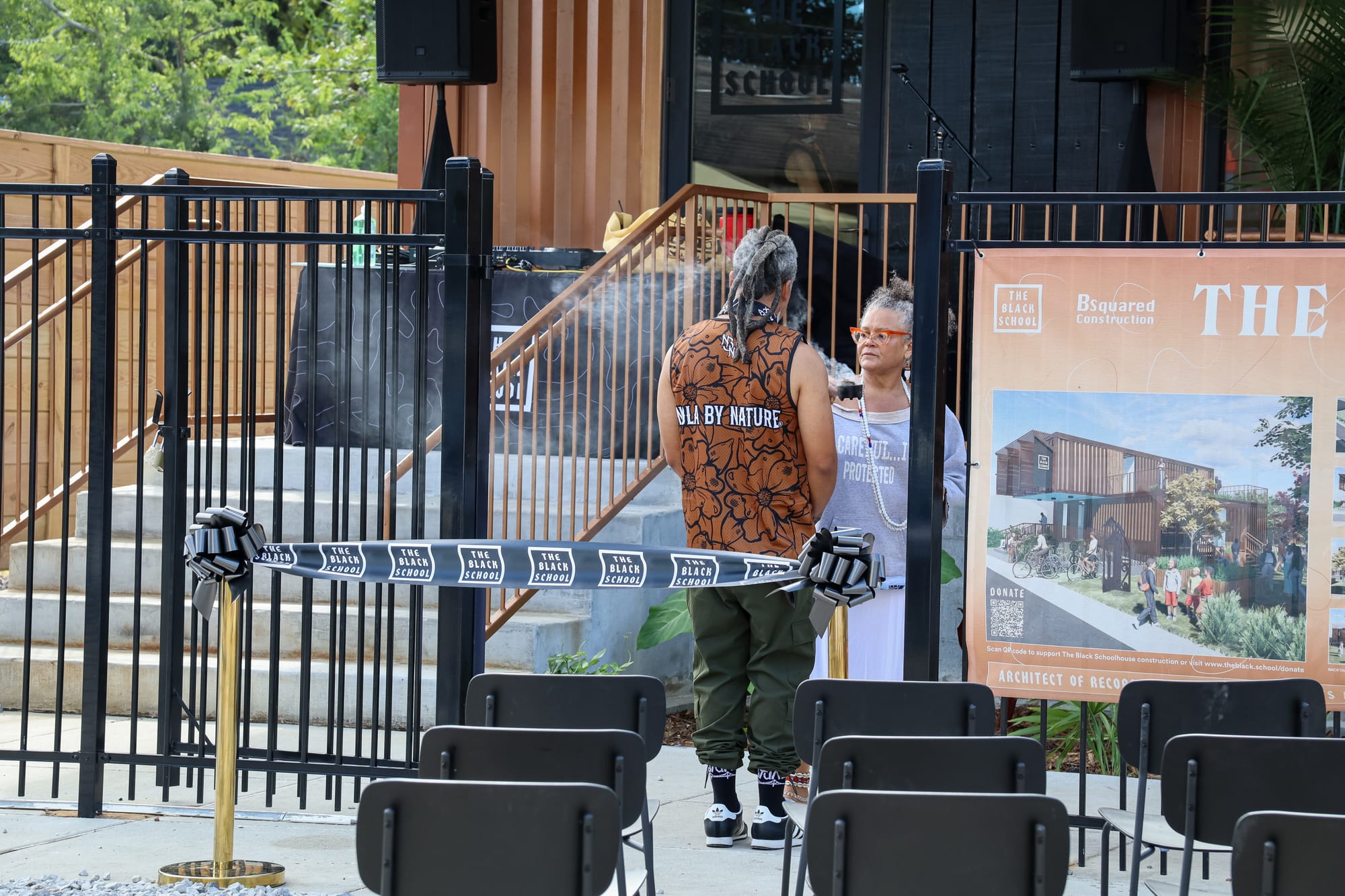
NEW ORLEANS - The Black School opened its first permanent home Saturday, cutting the ribbon on the Black Schoolhouse, a community arts center in the Seventh Ward, on the organization's 10th anniversary.
State Sen. Royce Duplessis marked the date when he read a Senate commendation from the podium: 10 years, on 10/10.
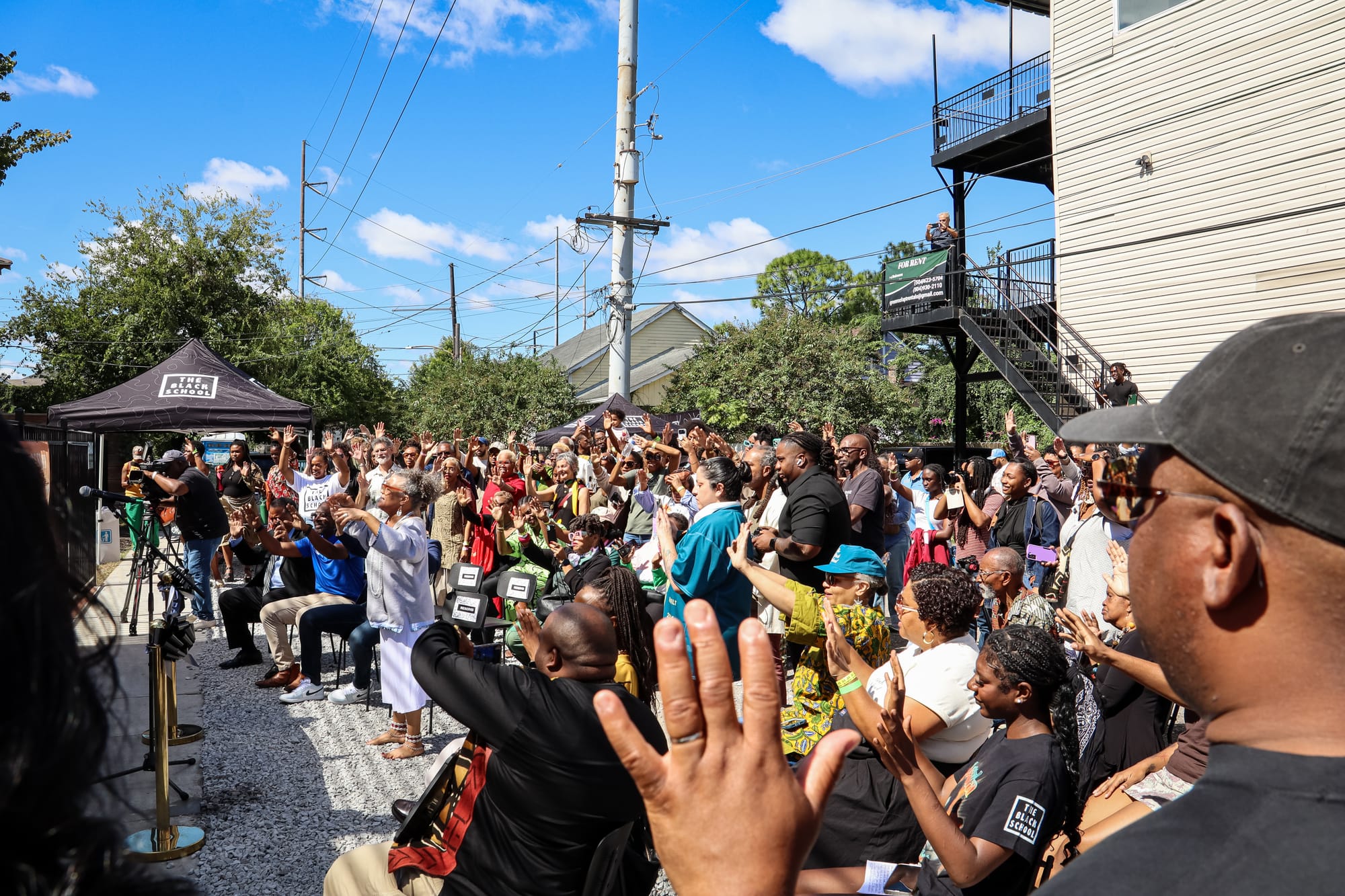
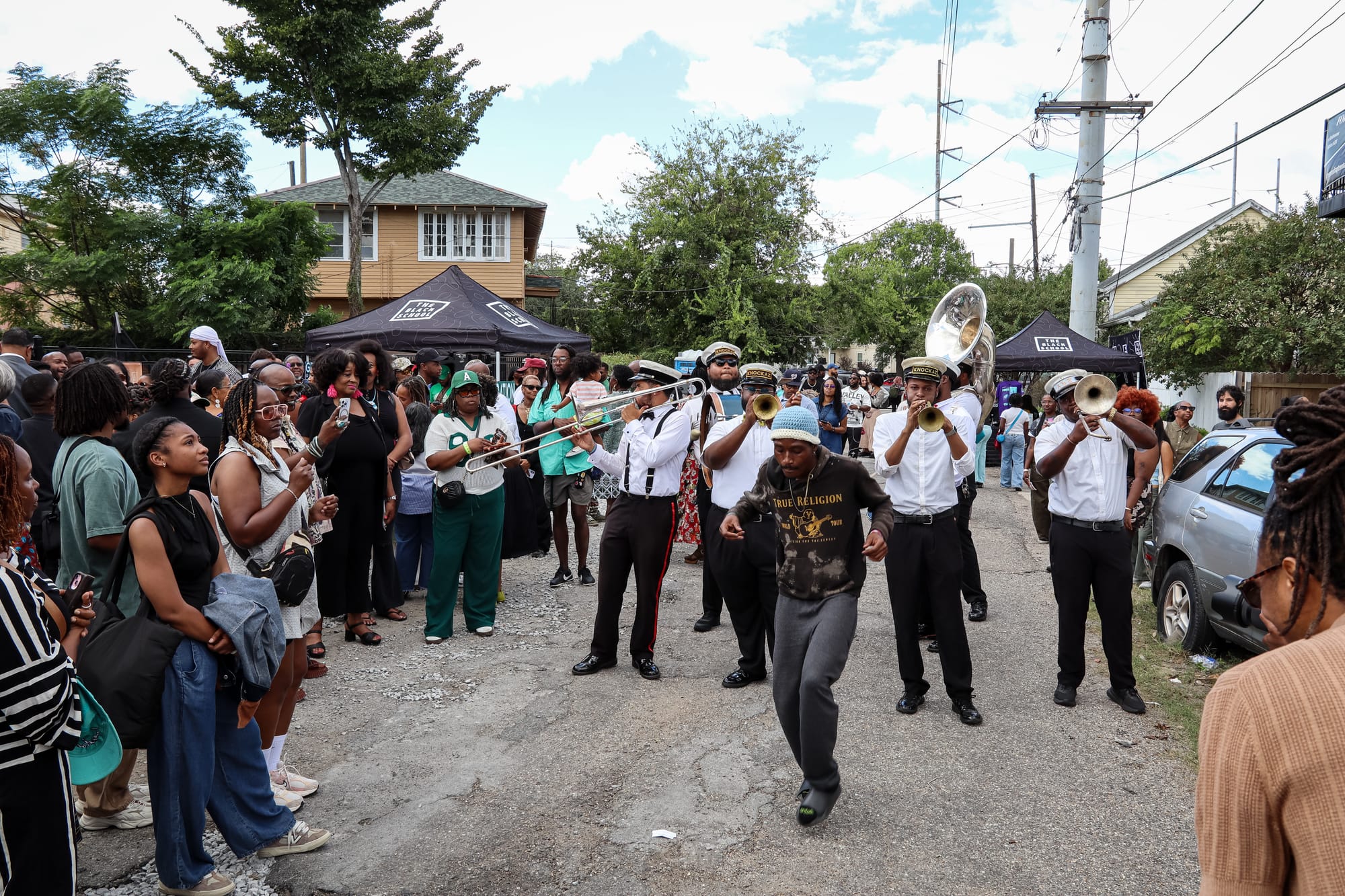
Co-founders Shani Peters Cuillier and Joseph Cuillier, married artists who started the school in New York in 2016 and moved it to New Orleans in 2021, were joined by elected officials, a deputy mayor, former apprentices, board members, and a crowd that filled the grounds at 1660 N. Roman Street.
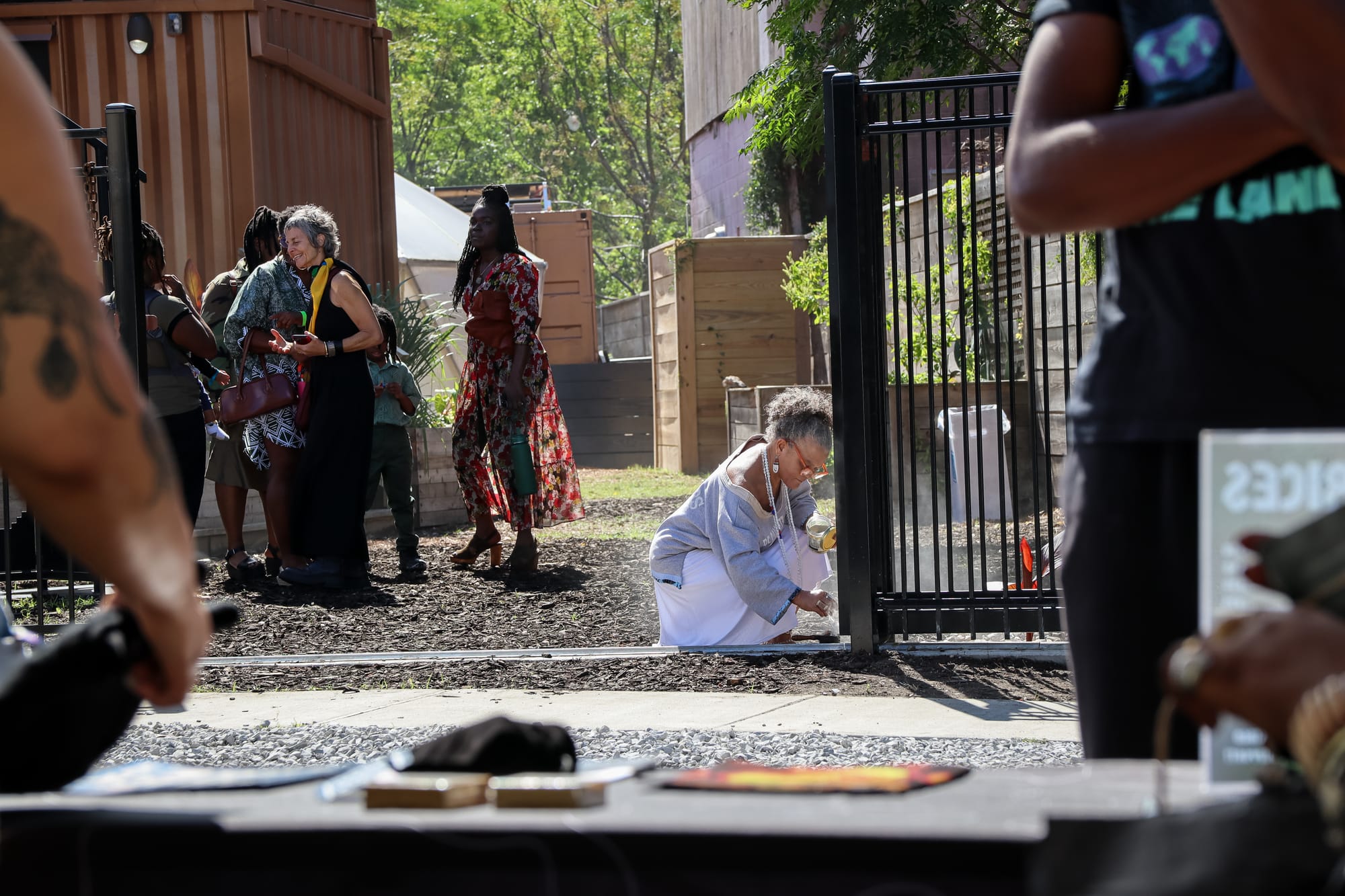
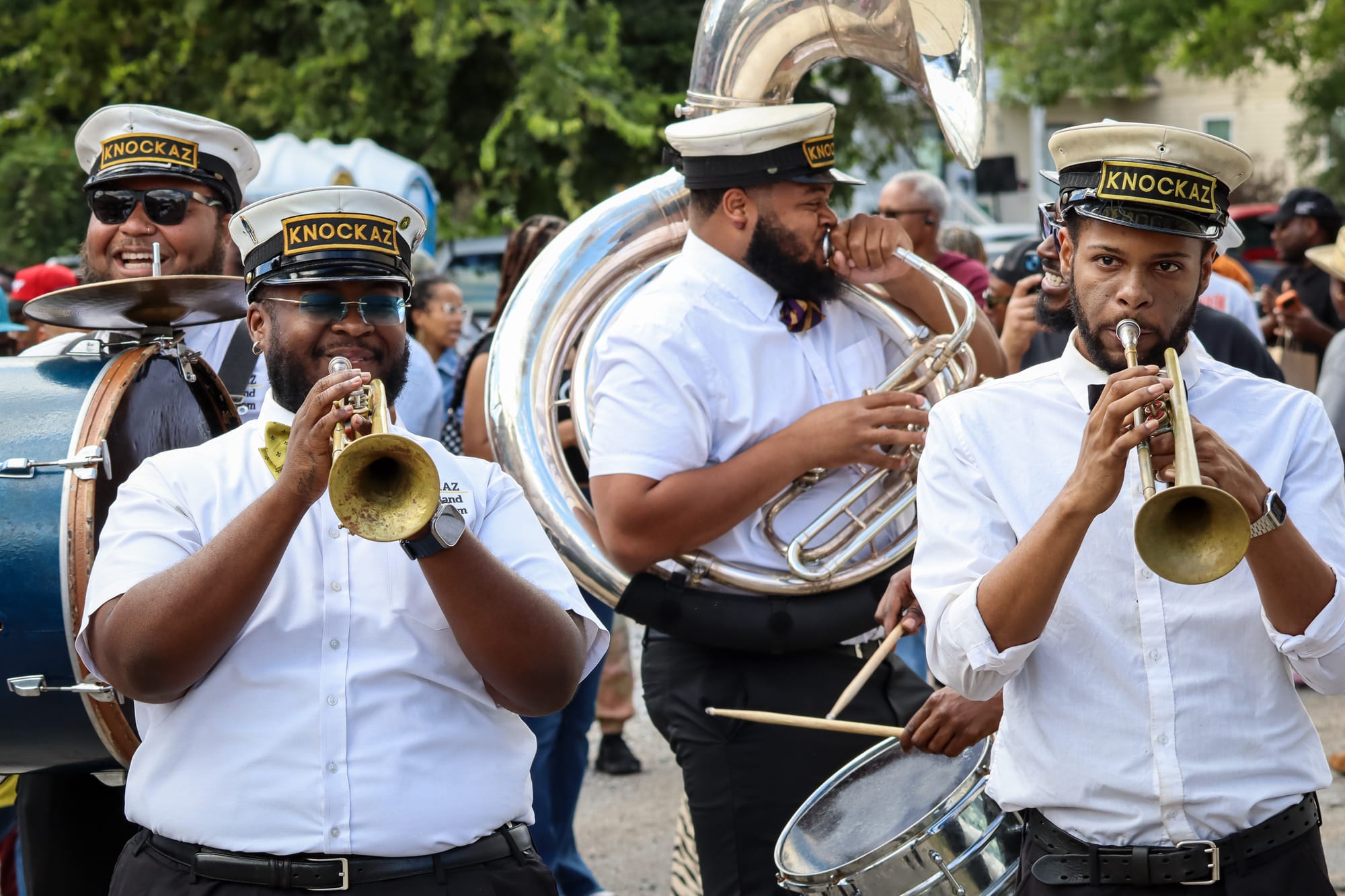
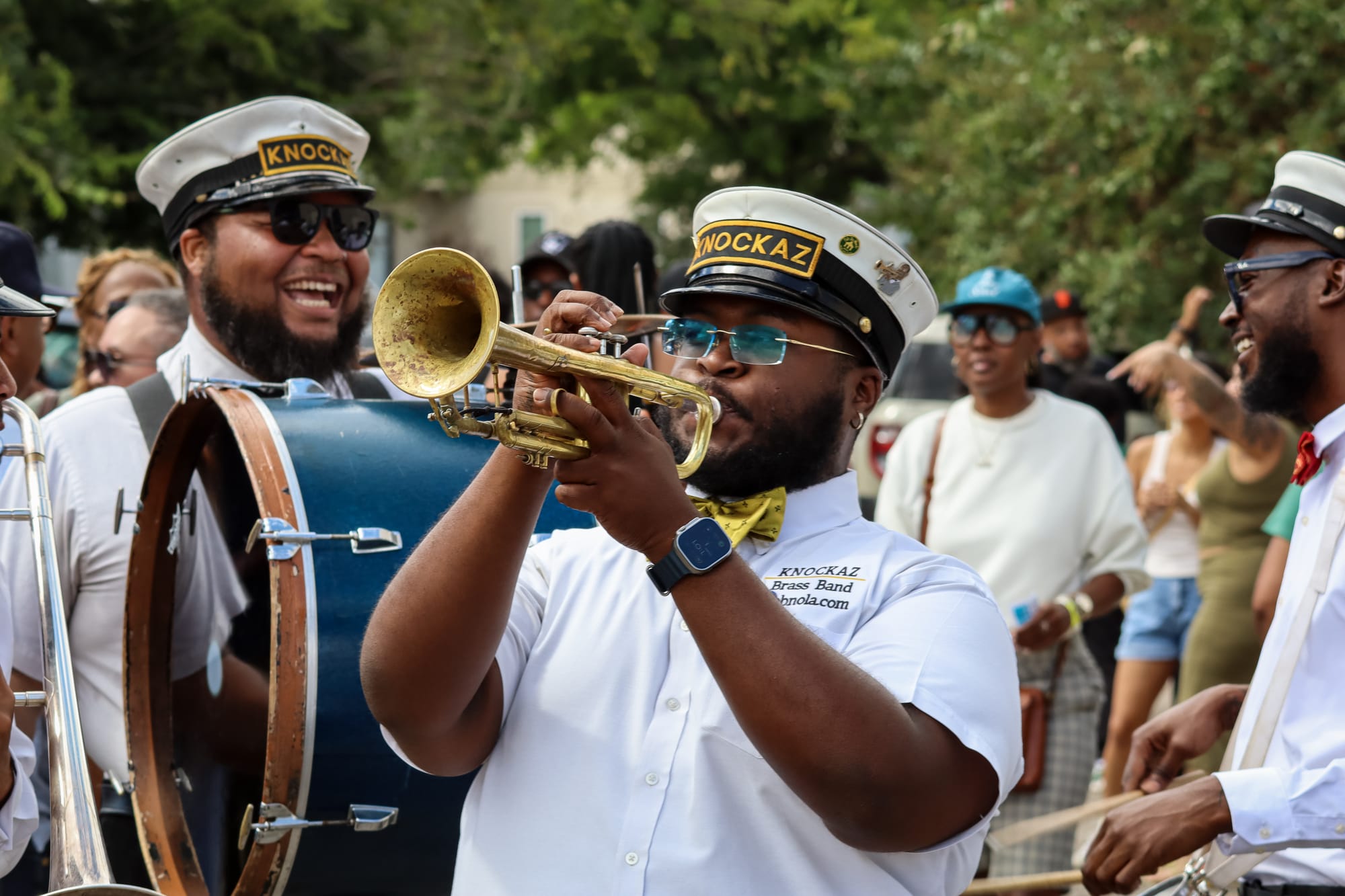
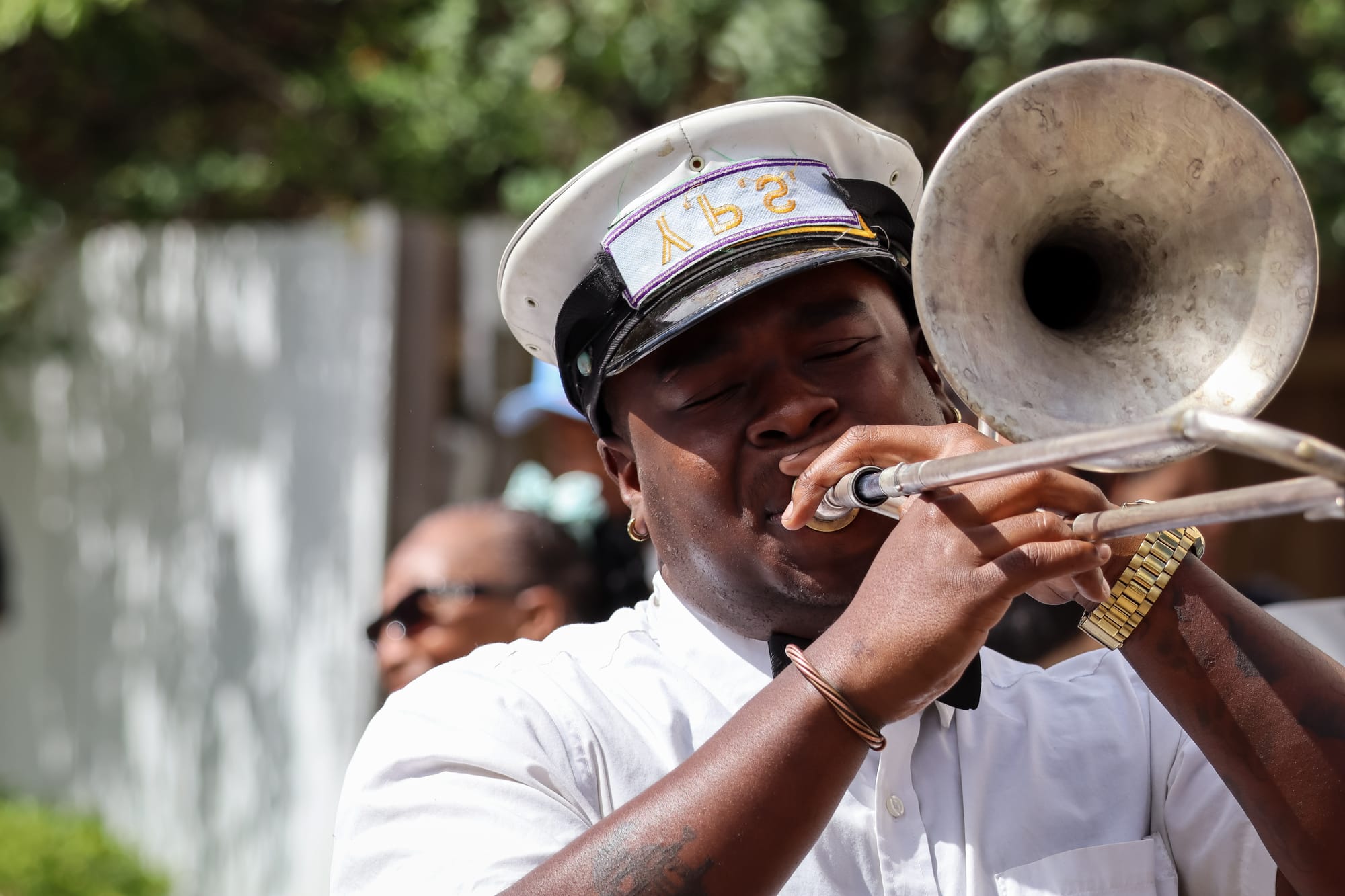
Sage smoke moved across the grounds as guests arrived. The ceremony opened with drums, prayer, and a libation poured to the ancestors. The officiant, blessed the building and asked that only people with good intentions cross its doorstep. She told the crowd she had married the couple, and that she first met them in Congo Square.
What was built
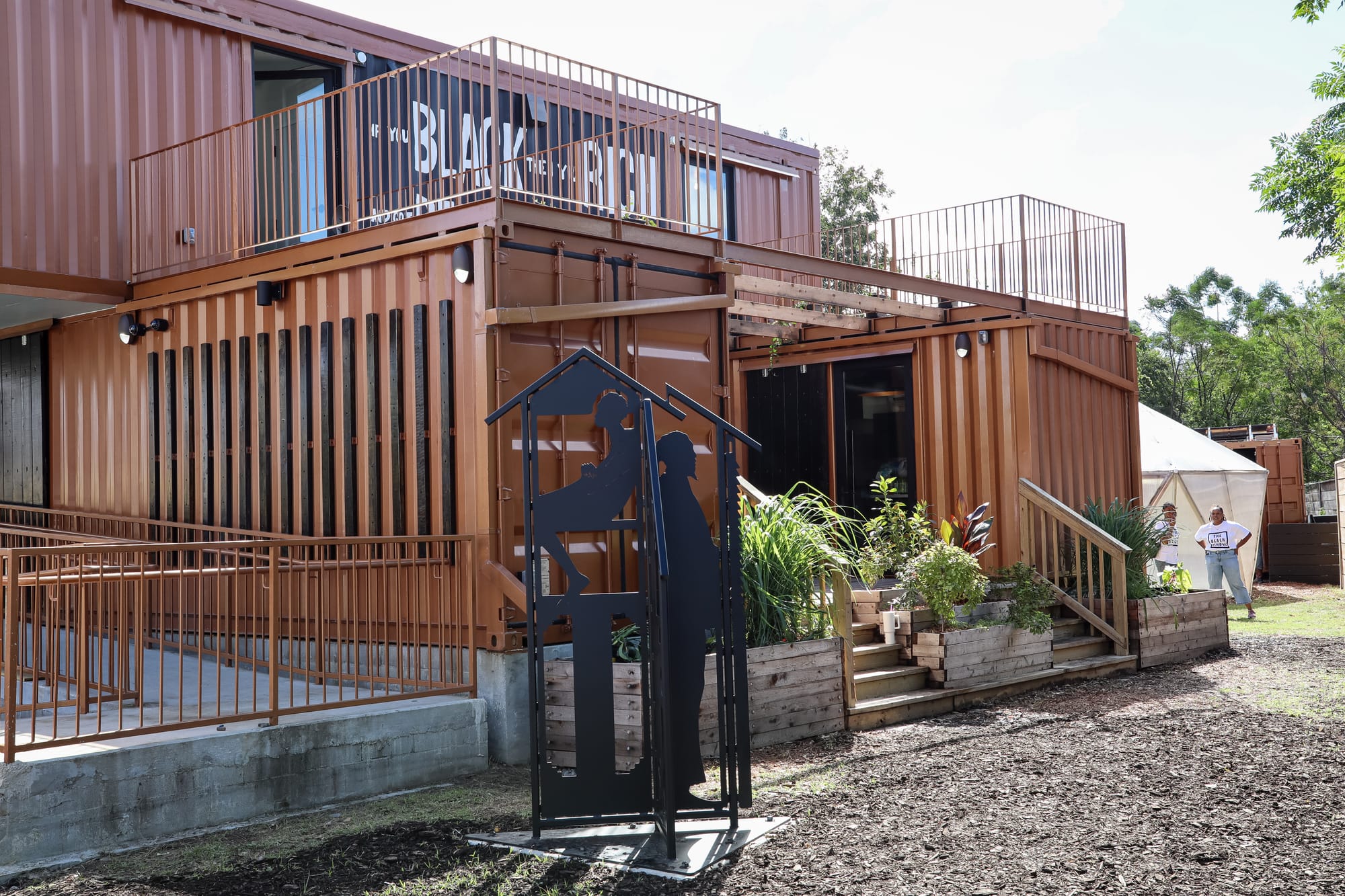
The Schoolhouse is roughly 2,000 square feet, assembled from repurposed shipping containers, according to designboom, which reported the project at about $1.7 million in total investment. The school's February 2026 fundraiser listing put the total project budget at $2 million, with $250,000 then left to raise.
That listing names LOT-EK of New York as designer, Whawn Allen of New Orleans as architect of record, and BSquared Builds of New Orleans as builder. The school closed on 8,000 square feet of land in October 2021, according to a City College of New York lecture listing.
How it was paid for
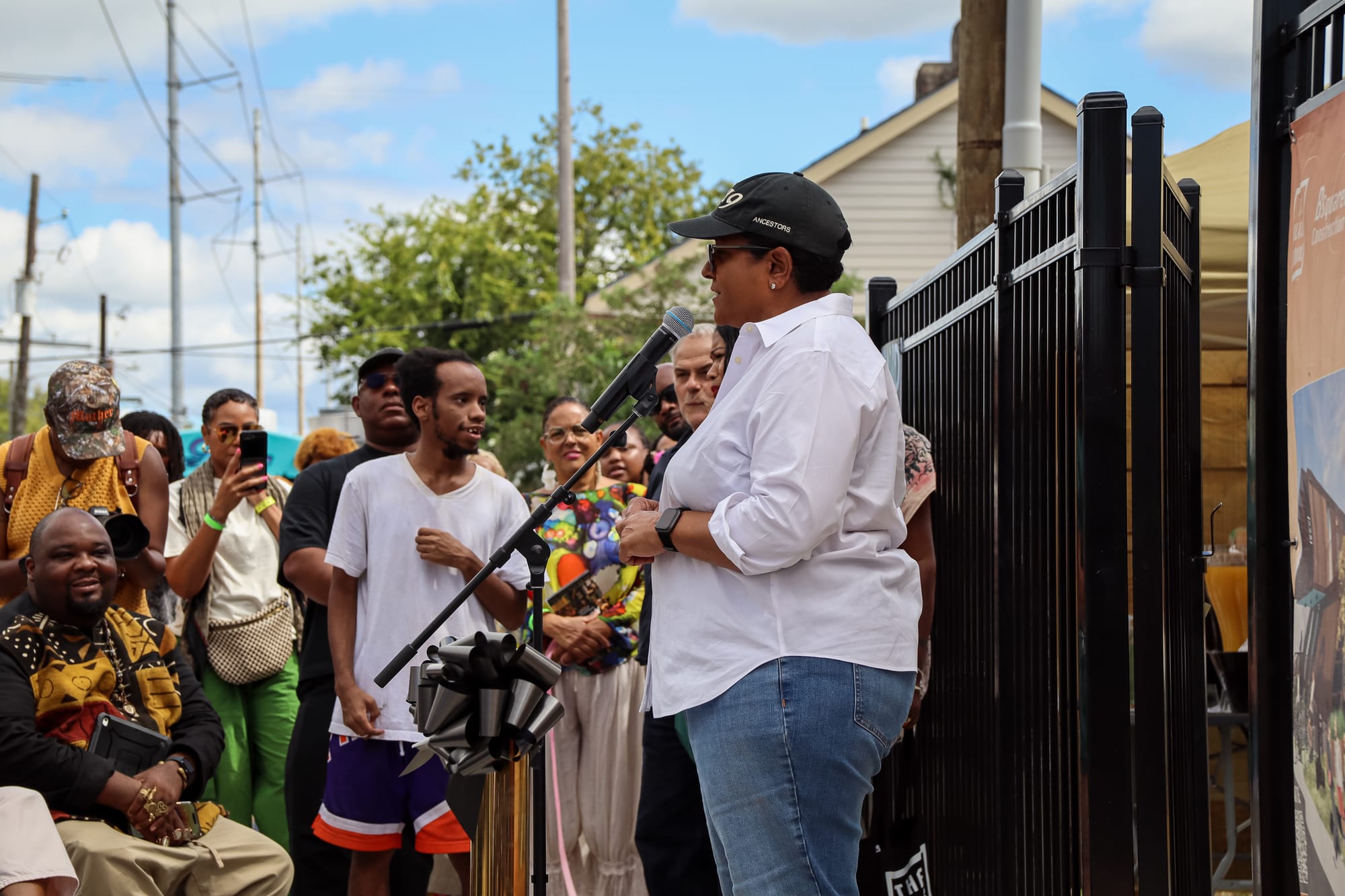
Peters Cuillier described the funding in the order she said it mattered: people first.
In 2020, she said, the school launched a GoFundMe campaign with a $300,000 goal and raised $100,000 in the first week. That public trust, she said, is what brought foundations to the table. She pointed to the school's current "We Fund Us" membership, monthly gifts, and legacy bricks as the continuation of that model.
She then thanked the foundations by name: the Mellon Foundation's Arts and Culture program, the Ruth Foundation for the Arts, the Ford Foundation, the Robert Wood Johnson Foundation, the David Rockefeller Fund, the Vitali Foundation, and Mellon's Humanities in Place program, which she said provided a $1.2 million capital investment.
Mellon's public grant records show two awards tied to the project. A $500,000 Arts and Culture grant in December 2020 went to Antenna, the school's New Orleans fiscal sponsor, for planning and pilot programming. A $1.95 million Humanities in Place grant in December 2022 went to The Black School to support construction, organizational capacity, and artist programs. The $1.2 million figure Peters Cuillier cited may refer to the construction portion of the larger grant.
Foundation representatives had planned to attend, she said, but the hurricane forecast made travel difficult.
If we can build the school, imagine what else we can build together.
A neighborhood of builders
The program returned again and again to one idea: the Seventh Ward was built by its own people.
A historian and board member, framed her remarks around the phrase "a mind to build." She traced the neighborhood's Creole plasterers, carpenters, and ironworkers, and pointed to the nearby Valena C. Jones school, which she said residents raised the money for, built, and gave to the school system. She named Big Chief Allison "Tootie" Montana, who was a plasterer by trade, as another builder in the same line.
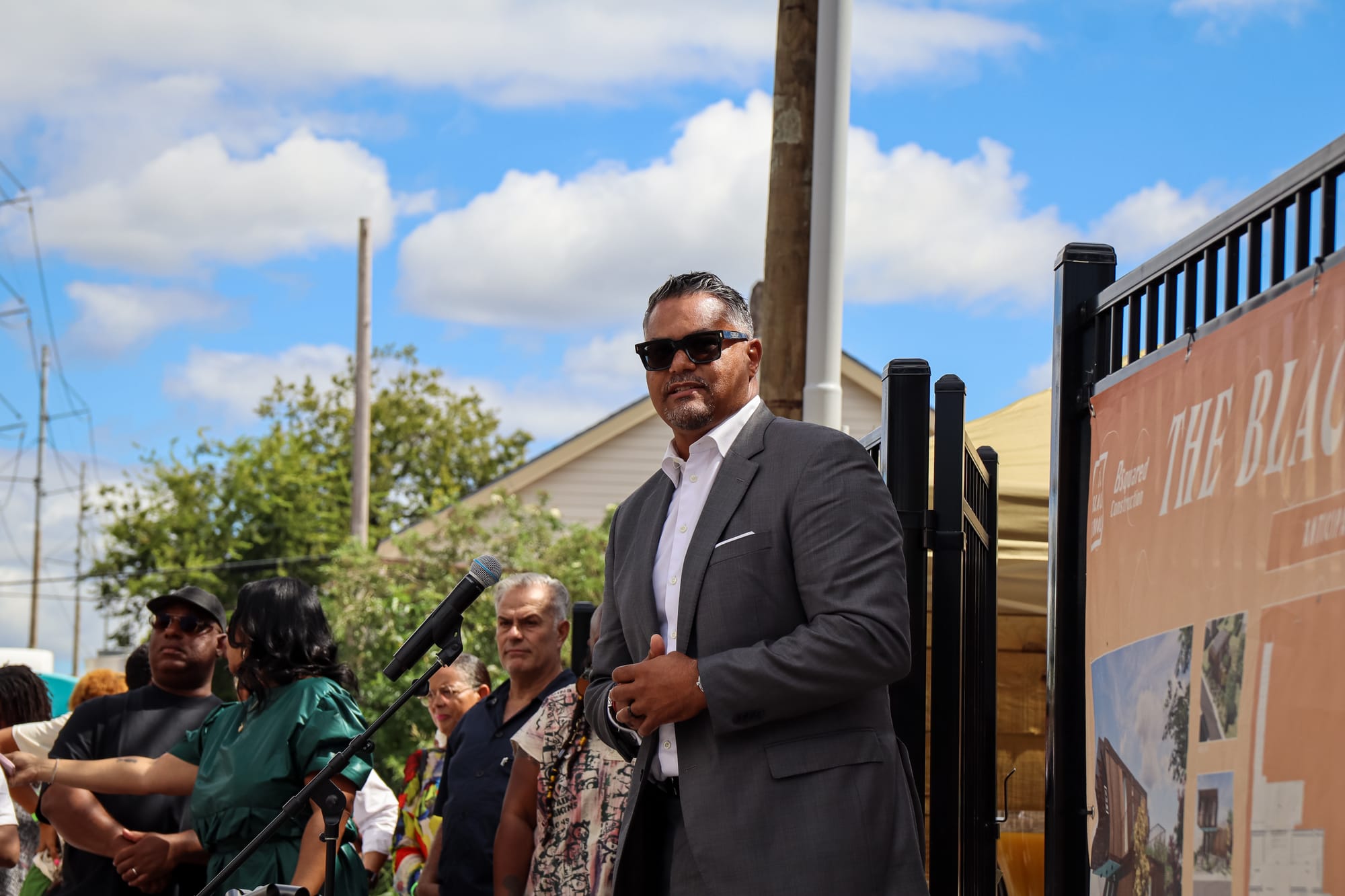
Joseph Cuillier tied the Schoolhouse to his own family. His great-grandfather's brothers moved to the neighborhood one by one and built each other's houses, he said, the first of them on Pauger Street, across from the family home of civil rights attorney A.P. Tureaud. His grandfather, Joseph Cuillier Sr., was an educator; a career center in Marrero carries his name.
"We just picking up the baton," Cuillier said.
What the school does
Cuillier described the Black School as a community art center that teaches art, design, and activism. "The point is, how do we use our creativity to build and maintain power?" he said.
Peters Cuillier named self-determination, Black love, and healing as the building's three core tenets, and said the couple co-designed the space with the community. "Now it's community's role to step in and say what we do next," she said.
Two graduates of the school's design apprenticeship spoke. Norman, 24, a graduate of the 2020 to 2021 class, said he left college, applied to the apprenticeship, and now works full time as a graphic designer in New Orleans and Brooklyn, on an opportunity the school presented to him when he finished. Julia Jackson, now a junior designer and design mentor with the school, said the apprenticeship taught her design and moved her into graphic design full time.
The officials
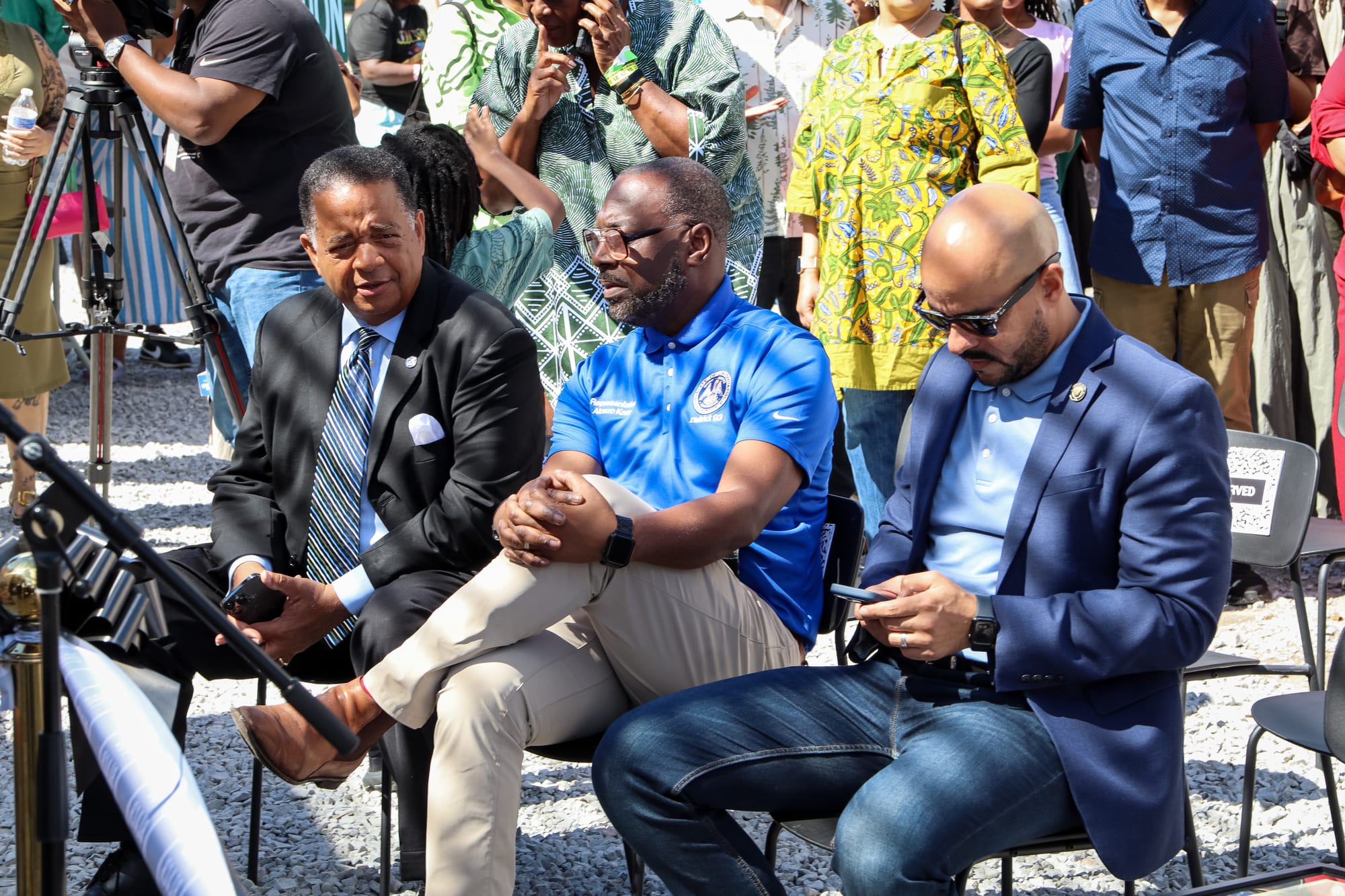
Councilmember Eugene Green, who said he grew up in the Seventh Ward and attended St. Augustine High School, said he had been by the site many times since the groundbreaking. He said the city had been able to help "a little bit" through its cultural recreation fund, and that more support could follow as the city's finances recover.
Royce Duplessis, whose Senate district includes the neighborhood, said his mother attended Valena C. Jones and that the school's founders had held to the name and the mission as the national landscape shifted after 2020. He also recognized state Sen. Sidney Barthelemy II, state Rep. Alonzo Knox, and Green.
Sidney Barthelemy, elected to Senate District 3 in a March 2026 special runoff, is president of B-Squared Construction. Duplessis credited him from the podium as the one who built the Schoolhouse.
Renee Lapeyrolerie, Mayor Helena Moreno's deputy mayor for external affairs, said she worked with Barthelemy on what she called a "concierge level of service" in permitting the project. She said the administration's goal is to provide that level of service to all projects in the city.
Board chair Aisha Williams, who said her childhood home is in the Seventh Ward, brought her grandparents to the podium with her and spoke about their families' paths to New Orleans. She closed by invoking artist Alisha B. Wormsley's line that there are Black people in the future.
"This is what happens when we let artists run the world," Williams said.
Two artists built a school. Two Black artists.

What comes next
Peters Cuillier called the opening "just the beginning." Cuillier invited the crowd back: anyone who wants a future for Black people in New Orleans, he said, should come build it at the school.
Kim M. Braud is the Founder & Editor of Evans Cutchmore Press, an independent newsroom covering Louisiana and the Gulf South, and the author of Financial Power for Life™, a financial literacy framework that helps people earn, protect, grow, leverage, and transfer wealth. Her reporting focuses on government, infrastructure, business, culture, and the public policies that shape communities, with a commitment to highlighting progress and the people doing meaningful work in a news landscape often dominated by conflict and crisis.
© 2026 Evans Cutchmore Press. All rights reserved.