OPINION
Jeff Landry personally signed a nondisclosure agreement with Meta on behalf of the Office of the Governor. Even if the law permits it, a public office's silence is not the governor's to trade away.
By Ani Catherine | August 8, 2026
There is a signature in Baton Rouge that should give every Louisianan pause. Not for what it hides, but for who signed it, and on whose behalf.
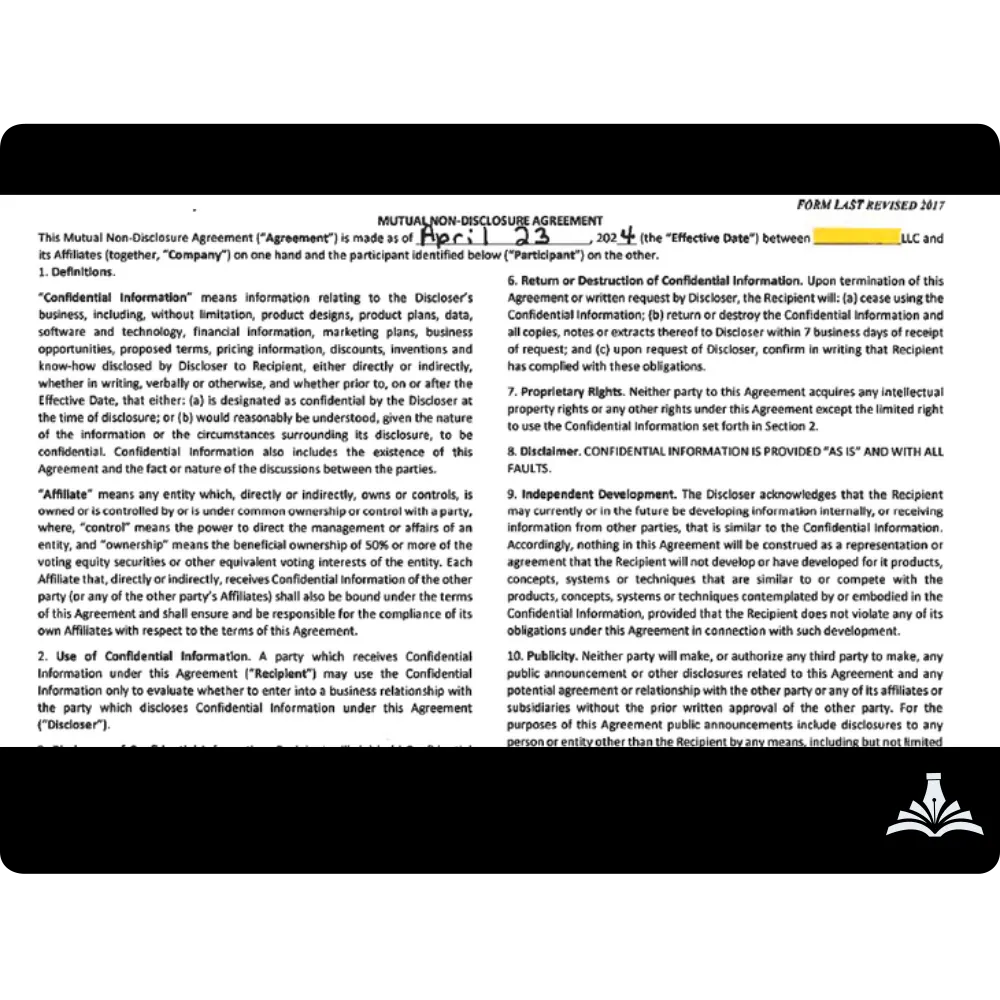
Records obtained by the Gulf States Newsroom and Type Investigations show that Governor Jeff Landry personally signed a mutual nondisclosure agreement, effective April 23, 2024, on behalf of the Office of the Governor. The other party was Laidley LLC, the data center subsidiary of Meta. The agreement bars either side from making public announcements or disclosures about the deal or their discussions, including to reporters, without the other's written approval.
Read that again slowly. The Office of the Governor, an office the public owns, agreed not to speak without a private company's permission.
What the document does
The word that deserves scrutiny is "mutual." A mutual agreement sounds like a handshake between equals. On paper, it is. Both parties are bound. Both need the other's sign-off to talk.
But the two signatories are not equals in the way that matters most. One is a private company answerable to shareholders. The other is a public office answerable to three million voters. When a company keeps a secret, that is a business decision. When a public office keeps the same secret, it is keeping it from the people who pay for the office.
This was not an isolated pen stroke, either. The same reporting found that more than 100 state employees have signed nondisclosure agreements with Landry's office, and that they can be fired or sued, even after leaving state government, for violating them. The governor's own press secretary signed two: one with the state, and a separate agreement with Meta that bars her from confirming or commenting on any information about the company without its written permission. By the plain language of both documents, she cannot even confirm the agreements exist.
A company keeps secrets from its competitors. A public office, when it signs the same paper, keeps them from its own public.
Meta's reasons, and the public's
To be fair, Meta's position is on the record, and it is not unreasonable. The company says confidentiality is a standard part of competitive site selection, meant to stop speculation about projects that may never materialize. Its spokesman says Meta does not stop officials from disclosing where a data center will sit or discussing its environmental impact once a project advances.
That is a legitimate concern. A firm scouting locations does not want competitors, or the local land market, reading its plans in the morning paper. State economic development officials say they use a mix of general and project-specific agreements, and that some companies insist on their own terms. None of that is scandalous on its own.
But a company's reasons for wanting silence are not the same as a public office's reasons for granting it. Meta is doing exactly what a private company is built to do: protect its interests. The question is not whether Meta should ask. The question is whether the state should agree, and on what terms, and with what disclosed to the people it serves.
What are we actually protecting
Louisiana law already lets agencies withhold certain records from public requests. A transparency researcher who reviewed the arrangement put the problem precisely: existing law governs documents, while this agreement appears to extend the same protection to speech itself. That is a meaningful line to cross. A withheld record can still be described, litigated, and eventually pried loose. A gag on speaking does not leave that door open.
So the honest questions are the old ones this column keeps returning to. What problem are we solving? Who benefits? Who bears the cost?
The problem, as stated, is speculation about deals that might fall through. The beneficiary is a trillion-dollar company that would rather negotiate in private. The cost falls on residents of Richland Parish and the rest of the state, who will live beside the largest facility of its kind Meta has built, and who learned the terms of their government's silence only because a newsroom filed a records request and won.
The line worth drawing
None of this requires assuming bad faith. A governor can believe, sincerely, that confidentiality lands the deal and the jobs. He may even be right about the economics. The trouble is structural, not personal. An office that can contract away its ability to answer the public's questions has quietly changed what that office is for.
There is a version of this that protects everyone's legitimate interests. The state can shield a company's genuine trade secrets and proprietary site data through the records exemptions Louisiana law already provides. What it should not do is let any public office sign away its capacity to speak to the people it represents. At a minimum, the existence and scope of these agreements should be disclosed as a matter of course, not surfaced by investigative reporting after the ink has dried. That is a line the Legislature can draw, and should.
A secret kept from a competitor and a secret kept from a constituent are not the same kind of secret, even when they are written on the same page. Transparency is not a courtesy the state extends when it is convenient. It is the mechanism by which people consent to what is built in their name.
The governor signed. The harder question is whether the office was ever his to quiet.
Ani Catherine is a contributing opinion writer for Evans Cutchmore Press, examining power, memory, and institutional authority. Her work challenges accepted narratives, asking what is preserved, what is erased, and who benefits from the distinction. Her op-eds explore history, identity, grief, and systems of power with an unfiltered voice. Some challenge. Others linger. All are written with the understanding that language is never neutral, memory is never accidental, and silence often serves power.
© 2026 Evans Cutchmore Press. All rights reserved.