OPINION
A senator swore at a witness he had summoned. A new study says public profanity from the nation's highest officials has never been more common. The question is not whether the language was honest. It is whose room it was.
By Ani Catherine | August 9, 2026
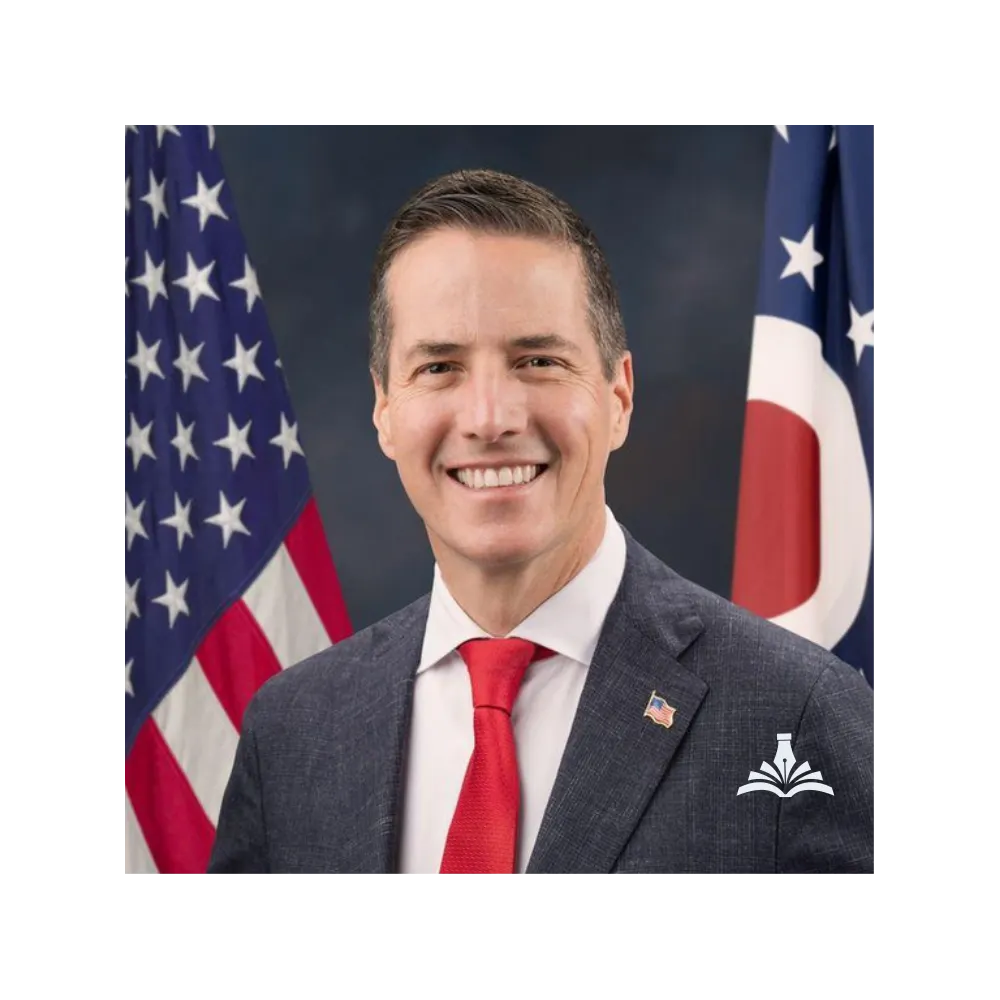
On July 29, before the Senate Homeland Security and Governmental Affairs Committee, Sen. Bernie Moreno of Ohio leaned into his microphone and put a question to Anthony Fauci that was not really a question. "Who the fuck do you think you were for doing that?" he said, and then he called what Fauci had done to the country a disgrace.
The clip traveled before the hearing gaveled out. That was not incidental to the moment. It was the moment.
It would be easy to file this under bad manners and move on. It is more useful to ask why the manners changed, because they have, and the change is now measurable.
What the numbers actually show
A Cardiff University politics lecturer, Dr. Joseph Phillips, went back through the presidential archive and counted. Presidents, vice presidents, and presidential candidates have sworn in public at least 692 times since 1919, the year Woodrow Wilson admitted he had made a conspicuous ass of himself. Of those 692 instances, roughly 87 percent happened in the last decade. Two men, Donald Trump and Joe Biden, account for 78 percent of the total.
CNN's Dana Bash gave the phenomenon a name on air, potty mouth politics, and the name fits the archive. This is not one senator having a bad afternoon. It is a curve, and the curve points up.
Here is the part worth sitting with before reaching for a verdict. Phillips does not read the trend as a failure of character, and neither should we. He reads it as strategy. In a time of low political trust, profanity reads as authenticity, and authenticity is the scarce currency. It signals that the speaker is relatable, unscripted, of the people, because ordinary people curse. Nick Beauchamp, a political rhetoric scholar at Northeastern University, told Axios the same thing in different words: strong language channels a decade of anti-establishment feeling into a rejection of the status quo.
That case is not weak. The starched language of an older Washington was itself a performance, and often a dishonest one. A politician who never swears is not thereby more truthful. So if the question were only honesty, the cursing might win it.
Authenticity is a virtue of persons. A committee hearing is not a person.
Authenticity has a venue
The question is not only honesty. It is venue, and venue is where the authenticity defense runs out.
A candidate who curses at a rally is standing on his own stage, on his own time, in front of people who chose to be there. A senator who curses at a witness is standing somewhere else entirely. A committee hearing is not his platform. It is the public's institution, convened in the public's name, carrying the public's power to compel a private citizen to sit down and answer. The difference between those two rooms is not etiquette. It is ownership.
When an official imports the register of the feed into that room, the room quietly changes hands. It stops being the place where public business is transacted and becomes the place where a clip is manufactured. The authenticity is real. The problem is that it is being performed with borrowed authority, in a space the performer does not own.
So the old questions still apply. Who benefits when a hearing becomes a highlight. What are we measuring when the loudest microphone moment is the one that gets rewarded. Who bears the cost. The witness bears some of it. The larger share is paid by the next resident who walks into a public chamber expecting a place where things get decided, and finds a stage instead.
And the audience for the performance may be smaller than the performers think. A Deseret News survey found only about a third of respondents considered it acceptable for politicians to curse in public. The public has made its peace with swearing on television and in daily life. It has not, by and large, asked its officials to bring it into the people's rooms.
None of this is a call to police anyone's vocabulary. Language will keep loosening, in politics as everywhere else, and no standards page reverses a culture. But decorum was never really about the words. It was a way of signaling that a room belongs to everyone in it, and not to whoever is holding the gavel.
The camera will always reward the sharpest thing said. The hearing room was built to answer to something else. The question worth keeping is whether we still want it to.
Official U.S. Senate photo, 2025. Public domain.
Ani Catherine is a contributing opinion writer for Evans Cutchmore Press, examining power, memory, and institutional authority. Her work challenges accepted narratives, asking what is preserved, what is erased, and who benefits from the distinction. Her op-eds explore history, identity, grief, and systems of power with an unfiltered voice. Some challenge. Others linger. All are written with the understanding that language is never neutral, memory is never accidental, and silence often serves power.
© 2026 Evans Cutchmore Press. All rights reserved.