NEWS
A City of New Orleans analysis lists every vetoed project across three budget bills, totaling $33,826,661, and reports that New Orleans absorbed 52.6 percent of the state's line-item vetoes.
By Kim M. Braud | September 7, 2026
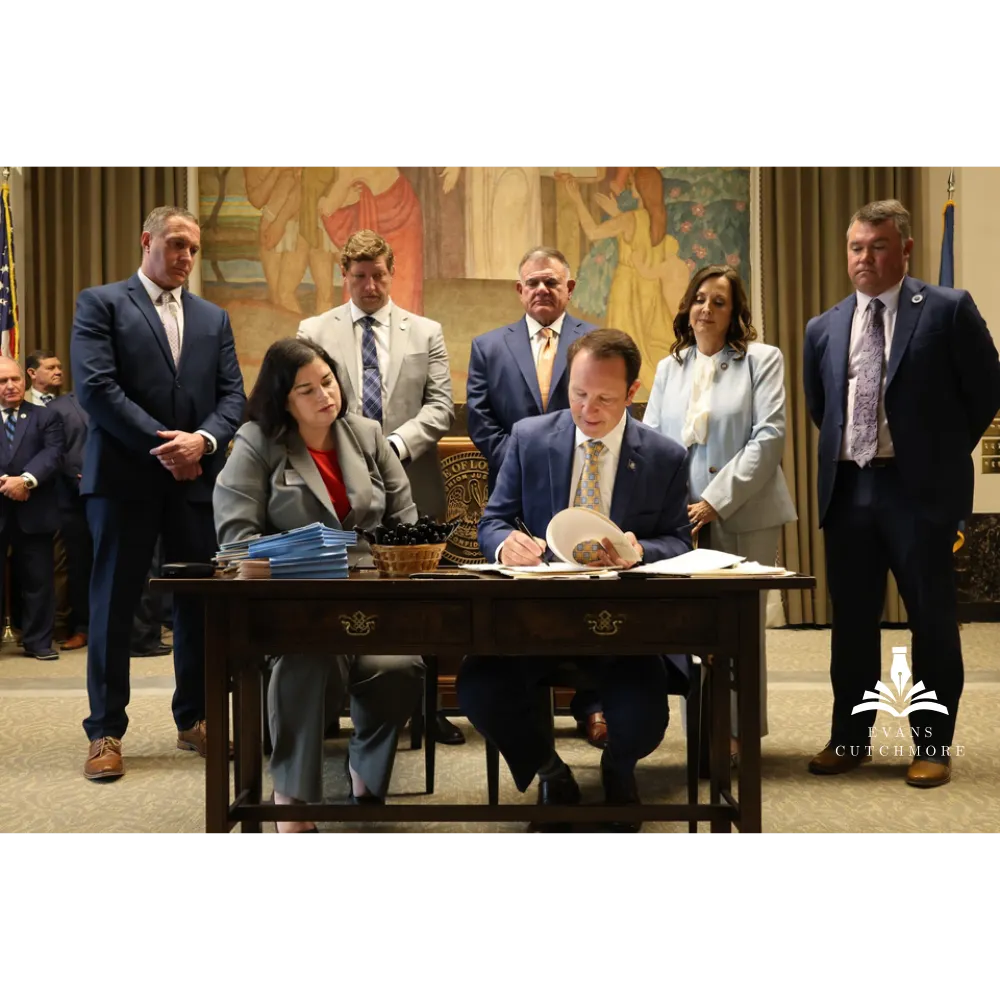
Gov. Jeff Landry's line-item vetoes struck $33,826,661 in projects and programs tied to New Orleans, according to an analysis the City's Intergovernmental Relations Team released on June 25.
The cuts span three budget bills: the state operating budget (House Bill 1), the capital construction budget (House Bill 2), and a supplemental appropriations bill (House Bill 312). Landry also issued a direct veto of Senate Bill 384, a New Orleans measure to create pilot innovation hubs, authored by Sen. Jimmy Harris.
By the City's count, New Orleans projects made up $33,826,661 of the $64,265,761 Landry vetoed statewide, or 52.6 percent. The share was uneven across the three bills: 62.4 percent of the operating-budget vetoes, 53.0 percent of the capital vetoes, and 14.4 percent of the supplemental vetoes fell on New Orleans.
Across three budget bills, the city counted $33,826,661 in vetoed New Orleans projects, 52.6 percent of the state total.
The same analysis reports a second figure. Measured against all New Orleans-area appropriations in the budget, roughly $2.22 billion, the vetoes erased 1.66 percent. The City's table puts the metro veto rate higher in New Orleans than in Baton Rouge (0.72 percent), Shreveport-Bossier (0.14 percent), Monroe (0.05 percent), or the Alexandria area (0.06 percent).
What kind of money was cut
Not all of the total was cash set to be spent this year.
The largest capital items carried state bond priority designations. Priority 5 places a project first in line for future bond funding. Priority 2 sits further back, queuing a project for a later year. The $16 million for Armstrong Park, for example, was $1 million in Priority 2 authority and $15 million in Priority 5. The $6.55 million Volunteers of America health hub was $550,000 in Priority 2 and $6 million in Priority 5.
Operating-budget and supplemental items, by contrast, were direct appropriations. Those included payments to the Orleans Parish Sheriff's Office, funding for Covenant House, and money for the Ellis Marsalis Center for Music.
The reaction
Mayor Helena Moreno said the city had been singled out and called the vetoes deeply disappointing. She said more than half of the state's line-item vetoes had hit New Orleans, and that the city would work with partners to restore the investments.
Several New Orleans lawmakers described the cuts as political retribution. Sen. Royce Duplessis, the only senator to vote against Landry's teacher-stipend plan, lost funding for a resiliency center in his district and said denying communities resources over political disagreement is not leadership. Rep. Delisha Boyd, whose Algiers district lost a cluster of small appropriations, said members of the Legislative Black Caucus noted that the cuts concentrated in their districts. City Council member Jason Hughes said the vetoes were the price the delegation paid for fighting the governor.
Landry framed the reductions as fiscal discipline. Through his spokesperson, he said funding for non-governmental organizations had faced scrutiny since he took office in 2024, and that the struck items were overwhelmingly NGO money. He pointed to the city's budget crisis, saying state help had to come with restraint rather than new projects the city might not be able to afford.
Part of the money has returned
On Aug. 13, the Joint Legislative Committee on the Budget restored $1 million of the $2 million Landry had vetoed for the Ellis Marsalis Center for Music in the Upper 9th Ward.
The allocation was originally requested by Senate President Cameron Henry, a Republican from Metairie whose district reaches into New Orleans, and Henry worked to restore part of it. Harry Connick Jr. is one of the center's founders and had sought state support after raising private money for the project. The restored funds will flow through the lieutenant governor's office, which oversees cultural projects, to buy equipment and instruments.
The first dollars returned in August, when a legislative committee restored $1 million of the $2 million cut from the Ellis Marsalis Center.
The full list
The following is the City of New Orleans' itemization of the vetoed projects, grouped by bill.
House Bill 1, state operating budget
- Covenant House: $728,042
- City of New Orleans for Behrman Stadium: $1,000,000
- Orleans Parish Sheriff's Office: $500,000
- Orleans Parish Sheriff's Office: $500,000
- Ellis Marsalis Center for Music: $2,000,000
- Bywater Neighborhood Association: $50,000
- Judicial security upgrades, Algiers Courthouse: $50,000
- Algiers Development District, NORD and InspireNOLA Championship Field recreation: $300,000
- Algiers Development District, City Council District C recreation: $50,000
- Algiers Development District, blight remediation: $75,000
- Algiers Development District, Human Assistance and Needs Development program: $100,000
- Algiers Economic Development Foundation: $25,000
- Algiers Economic Development Foundation, Career and Educational Development Program: $150,000
- Operation SPARK: $75,000
- Eastern New Orleans Neighborhood Advisory Commission: $200,000
- Gentilly Development District: $200,000
House Bill 2, capital outlay
- Municipal Auditorium and Armstrong Park redevelopment: $16,000,000 ($1,000,000 Priority 2 and $15,000,000 Priority 5)
- Volunteers of America Integrated Health Care Hub, adjacent to BioDistrict New Orleans: $6,550,000 ($550,000 Priority 2 and $6,000,000 Priority 5)
- New City Hall, planning and construction: $2,000,000 ($1,000,000 Priority 5 bonds and $1,000,000 in state general fund balance from a prior allocation)
- WIL REACH ONE Foundation, Center for High-Quality Early Learning: $1,750,000 ($1,000,000 Priority 5 bonds and $750,000 from the Capital Outlay Savings Fund)
- People's Housing+ Inc., LaSalle Street Resilience Hub: $1,000,000 ($100,000 Priority 2 and $900,000 Priority 5)
House Bill 312, supplemental appropriations
- Mayor's Office of Cultural Economy, economic and cultural traditions: $200,000
- Algiers Economic Development Foundation, Inc.: $100,569
- Central City Economic Opportunity Corporation: $50,000
- Dillard University scholarships: $25,000
- Heroes of New Orleans: $18,050
- Mayor's Office of Cultural Economy, culture bearers: $10,000
- Justice and Accountability Center: named by the City, no amount listed
The line items above that carry dollar figures total $33,706,661. The City's bill-by-bill totals reach $33,826,661. The difference of about $120,000 reflects the Justice and Accountability Center allocation, which the City named without a figure, and at least one operating-budget item inside the City's $6,103,042 House Bill 1 total that its published list does not itemize.
How to follow this
The body that can restore vetoed items is the Joint Legislative Committee on the Budget. Its meeting files are posted at jlcb.legis.la.gov, and the Aug. 13, 2026 file records the Ellis Marsalis allocation.
The City's veto analysis, listing every affected project and amount, was released June 25, 2026 by the Intergovernmental Relations Team.
The special session Landry has called for Oct. 23 through Nov. 13 concerns the election code and 2026 election dates, not budget restoration.
The New Orleans legislative delegation and the Governor's Office of Communications are the offices to contact on the status of any individual line.
Kim M. Braud is the Founder & Editor of Evans Cutchmore Press, an independent newsroom covering Louisiana and the Gulf South. Her reporting focuses on government accountability, infrastructure, business, culture, and the public policies that shape communities.
© 2026 Evans Cutchmore Press. All rights reserved.