ENERGY | COASTAL LOUISIANA
The state is one of five contenders for a federal nuclear lifecycle campus. Its application floats three hubs, including offshore salt-dome waste storage near Port Fourchon. For now, most of what the coast would need to weigh the risk is not public.
By Kim M. Braud | August 4, 2026
Louisiana is one of five states still in the running to host a sprawling federal nuclear campus, and one piece of its pitch reaches straight into the working coast: studying whether radioactive waste could be stored in salt formations beneath the Gulf.
The U.S. Department of Energy announced on July 28 that it had signed non-binding memorandums of understanding with Louisiana, Idaho, Oklahoma, Tennessee, and Utah to keep exploring the Nuclear Lifecycle Innovation Campuses program. The five were chosen from 28 applications filed by 26 states. Every finalist is led by a Republican governor.
The agreement does not award Louisiana a campus. It does not commit a federal dollar. It opens negotiations over whether the state can offer a site, a financing structure, a workforce, and a regulatory environment that fit. Hosting agreements, DOE says, come later, and only three of the five states will end up hosting one.
That is the frame for everything that follows. The concept is real. The commitment is not, at least not yet.
What Louisiana actually applied for
The application came from the Louisiana Department of Conservation and Energy, which pointed to what the state calls its Nuclear Strategic Framework. Department spokeswoman Anna Johnson described three potential hubs and stressed to reporters that they are initial concepts, not final plans.
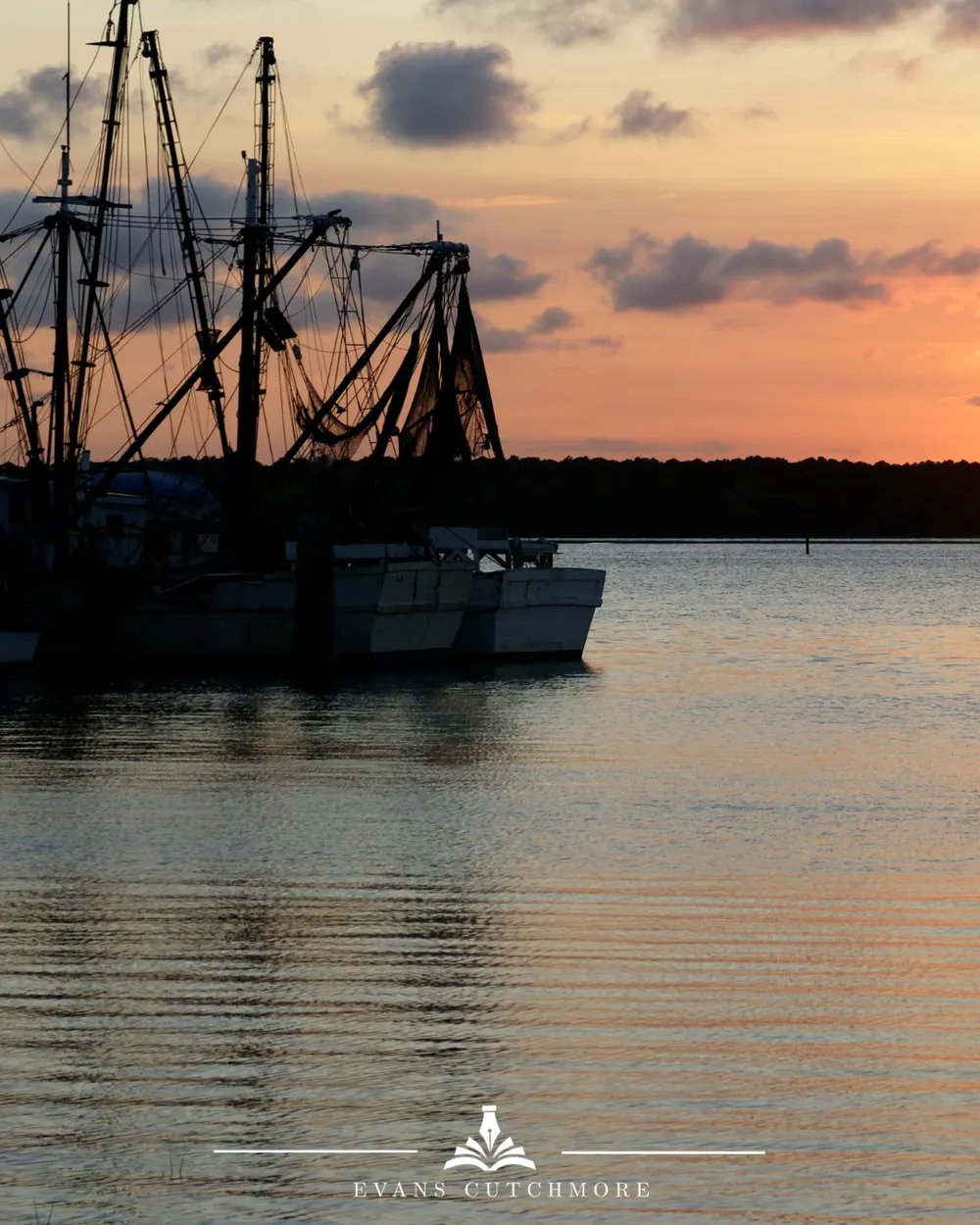
The first is the Baton Rouge area, tied to existing chemical manufacturing and LSU research, floated for uranium enrichment and testing. The second is northwest Louisiana, pitched for small modular reactors or microreactors that could power data centers. The third is Port Fourchon, named for disposal options, including storing nuclear waste in offshore salt domes under the Gulf of Mexico, as reported by The Times-Picayune.
Governor Jeff Landry welcomed the selection, saying the state is ready to lead the next era of nuclear energy. Patrick Courreges, the department's press secretary, framed the federal goal as rebuilding the entire nuclear supply chain, from enriching fuel to reusing spent fuel.
Louisiana is not new to this
The language of a new nuclear era can obscure a plainer fact. Louisiana has run reactors for four decades. Entergy operates two utility-scale nuclear plants in the state, River Bend Station in St. Francisville and Waterford 3 in Killona. Waterford 3 entered commercial operation in 1985 and River Bend the year after. Federal regulators have relicensed the pair to run into the 2040s, Waterford through 2044 and River Bend through 2045. Together they supply more than 16 percent of the state's electricity.
They also already store nuclear waste. Both plants keep their spent fuel on-site, and they do so for a specific reason: the federal government never opened a permanent home for it. As The Advocate reported when the licenses were renewed, the on-site storage traces back to the blocked Yucca Mountain repository in Nevada, where the nation's spent fuel was supposed to go.
Louisiana has held nuclear waste for 40 years, in small amounts, because Washington never solved where it should go.
That history is the missing context in the campus pitch. The disposal hub floated for Port Fourchon is not an abstract new idea dropped onto the coast. It is a proposal to take on more of a problem the state has quietly lived with since the 1980s, and it lands at the same moment the White House is circulating a draft to end Yucca Mountain's status as the sole federal repository.
Why the push is happening now
The engine behind Louisiana's nuclear ambitions is not on the coast. It is in Richland Parish, where Meta is building what it calls its largest data center. To power it, Meta is funding seven new natural gas plants totaling more than 5,200 megawatts, along with new transmission and battery storage, for a site that could eventually draw 5 gigawatts.
Gas is the near-term answer. Nuclear is the pitch for what comes after. Entergy and Meta have committed to exploring nuclear as a future supply option, including small modular reactors and upgrades to existing plants, and Entergy's 20-year deal with Meta already includes funding a refueling cycle upgrade at Waterford 3, as The Times-Picayune reported. Governor Landry rolled out his call for more reactors, components, and fuel enrichment at a global energy conference framed around that same demand.
To be clear about what connects to what: the federal campus would not power Meta's servers. Waste disposal generates no electricity, and the data center runs on gas for the foreseeable future. What links the two is demand. The load from projects like Meta is the argument the state is using to expand nuclear across the board, from plant uprates to small reactors to enrichment and, at the far end, disposal. The campus and the data-center boom are being sold as two halves of the same energy story.
The Gulf salt-dome idea, and what is not yet known
Salt domes are already part of Louisiana's industrial landscape. The relevant question for the coast is not whether the geology exists. It is what would go into it, under what safeguards, and who would be accountable if something failed.
Those answers do not exist in public form today. The state has not disclosed the specific Port Fourchon location, the landowners involved, or which nuclear activities the site might host. DOE has not released Louisiana-specific projections or made the state's application public.
The concept is on paper. The location, the landowners, and the state's own application are not.
There is, at this stage, no evidence that the proposal would harm Gulf seafood. There is also no public study showing it would not. Both statements are true at once, and the gap between them is the story.
What Louisiana's salt-dome record shows
The safeguard question is not hypothetical here. Louisiana has watched salt-dome operations fail twice in living memory, and both are documented.
On November 20, 1980, a Texaco oil rig drilling from the surface of Lake Peigneur, near Jefferson Island in Iberia Parish, punctured the active salt mine below after a miscalculation. The roughly ten-foot-deep freshwater lake drained into the mine, taking the rig, barges, and about sixty-five acres of land with it. The suction reversed the Delcambre Canal. No one died, but the mine was destroyed, the lake became a 1,300-foot-deep saltwater body, and Texaco paid tens of millions in settlements.
Thirty-two years later, in August 2012, the outer wall of a brine cavern in the Napoleonville salt dome collapsed near Bayou Corne in Assumption Parish. As 64 Parishes documented, Governor Bobby Jindal ordered the evacuation of about 350 residents after gas began bubbling up through bayous and lawns. The cavern was operated by Texas Brine Company. The sinkhole grew past 30 acres, released methane and oil, and kept residents out for four years. Texas Brine, found to be the responsible party, reached a 48.1 million dollar class-action settlement and bought out much of the community.
The detail that matters for a storage debate is how Bayou Corne failed. Salt-dome caverns are expected to fail from the top, not the side, and the same account notes that a wall collapse of this kind was uncommon and that seismic tremors heralding a sinkhole were without precedent. The failure mode was not the one operators were watching for. That is the hard lesson buried in the record: the risk that materializes is not always the one the models predicted.
Twice, Louisiana salt-dome operations failed. Both times, the damage was paid for after the fact. Neither involved radioactive material.
Two cautions belong with that record. Both failures came from mining and drilling, not from engineered waste isolation, and proponents note that salt is favored for permanent storage because it seals under its own pressure, the approach used at the federal WIPP repository in New Mexico since 1999. But the record still frames the stakes. When a salt-dome operation failed here before, the state cleaned it up with settlements and buyouts. That remedy does not translate to spent nuclear fuel, where a breach cannot be bought back. Which scenario applies to Port Fourchon depends on facts the state has not released.
Bayou Corne did change the rules. The Office of Conservation halted new mining in the Napoleonville dome and, under a 2012 law sponsored by Representative Karen St. Germain, adopted stricter cavern regulations, including setback distances from the edge of the salt stock, mapping of caverns every five years, and enhanced monitoring of existing ones, as summarized in this legal review. The setbacks were strict enough that some operators were later barred from expanding. Louisiana also already has a regulatory framework for disposing of waste in solution-mined salt caverns. The catch is what that framework covers. It governs oil and gas exploration and production waste, not spent nuclear fuel, which moves on a separate federal licensing track under the Nuclear Regulatory Commission. Whether the state's existing salt-cavern rules would even apply to what is proposed at Port Fourchon, or whether an entirely new federal process would govern it, is one more thing the public record does not yet answer.
The money on the table
The economic case is doing a lot of work in the state's messaging, so the figures deserve care. According to DOE, a fully developed campus could attract up to 50 billion dollars in capital investment, generate as much as 10 billion dollars in state and local tax revenue, and create nearly 25,000 jobs, as reported by Biz New Orleans.
Read those numbers as program aspirations, not Louisiana promises. They describe what a campus could do in general. DOE has not published state-specific economic projections for Louisiana, and no campus has been sited.
Not everyone reads the offer the same way. Jackson Voss of the Alliance for Affordable Energy told WBRZ that the real question is whether the investment serves the state as a whole, not only large industrial customers. Edwin Lyman, director of nuclear power safety at the Union of Concerned Scientists, was blunter, telling The Times-Picayune that the federal program is really about finding "another place to be the nation's radioactive dumping ground."
Who decides, and when
The federal push traces to the Trump administration's nuclear executive orders in 2025. DOE issued its request for information on January 28, 2026, and set an April 1 deadline for states to respond. The July MOUs are the next step, not the last one.
From here, states that choose to continue will negotiate hosting agreements with DOE later in 2026. DOE has signaled it will name the host states by the end of the year, narrowing the field from five to three. Separately, the White House has circulated a draft to end Yucca Mountain's status as the nation's sole designated repository, which would widen where federal waste could go.
What the public can see right now
Evans Cutchmore asks the same question of every public process: can residents actually reach it?
At this stage, the honest answer is that there is little to reach. No public hearing or comment period has been announced in connection with Louisiana's selection. The state's application is not public. The proposed locations are not public. The decision-makers to watch are DOE's Office of Nuclear Energy, the Louisiana Department of Conservation and Energy, and the Governor's office, and the next formal milestone is a hosting agreement that has not been drafted.
That is not an accusation. It is a status report. A decision this large, touching a coast that supports thousands of jobs and billions in economic activity, will eventually need a public record the public can find. Right now it does not have one.
Where to verify this yourself: DOE's Nuclear Lifecycle Innovation Campuses page and the Louisiana Department of Conservation and Energy's announcement.
Kim M. Braud is the Founder and Editor of Evans Cutchmore Press, an independent newsroom covering Louisiana and the Gulf South. Her reporting focuses on government accountability, infrastructure, business, culture, and the public policies that shape communities. Her work combines investigative journalism, public records research, and documentary storytelling.
© 2026 Evans Cutchmore Press. All rights reserved.