The City Council voted to name the North Villere Street center for the late Freedom Rider and youth mentor, and committed to take up Hunter's Field next, at the request of the organization he co-founded.
By Kim M. Braud | September 17, 2026
NEW ORLEANS - The New Orleans City Council voted Thursday to rename the Tremé Recreation Community Center for Jerome "Big Duck" Smith, permanently linking the name of the longtime civil rights activist, Freedom Rider and youth mentor to a neighborhood institution central to his life's work.
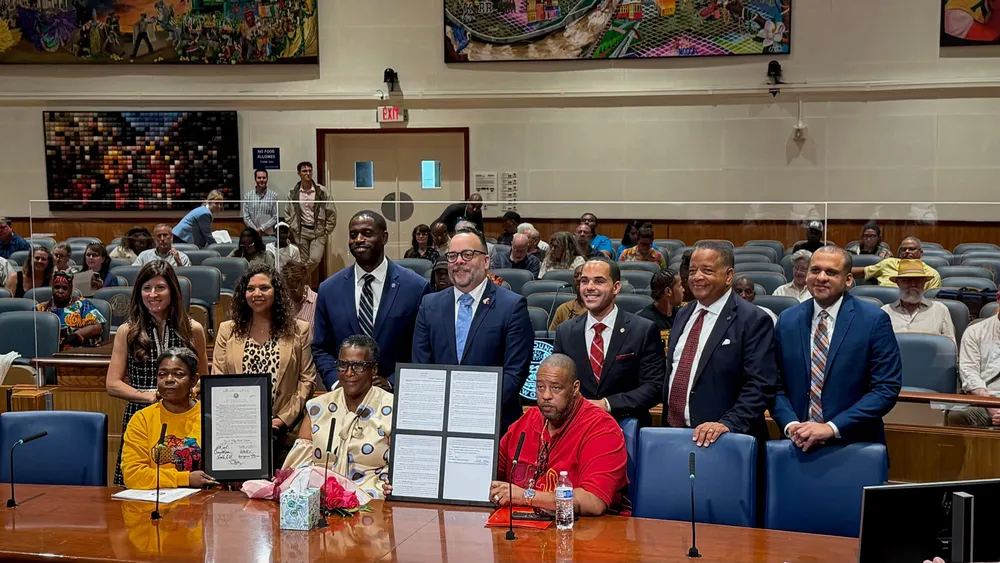
The Sept. 17 ordinance, Calendar No. 35,560, renames the center at 900 North Villere Street the Jerome Smith Recreation Community Center, the name the city used in announcing the vote. All seven Council members sponsored the ordinance, and it passed as amended, 7-0. A floor amendment by District C Councilmember Freddie King III corrected the last name of Smith's mother, Leona Smith-Sampier, and, as the clerk read into the record, kept "Tremé" in the center's name.
"We just wanted to make sure we didn't forget the name Tremé in the center," said King, who sponsored the ordinance.
The Council also adopted Resolution R-26-391, declaring May 21, 2027, "Jerome 'Big Duck' Smith Day" in New Orleans, by a second 7-0 vote. The date marks what would have been Smith's 88th birthday. The resolution honors him as a Freedom Rider, civil rights activist, community organizer, mentor, educator, culture bearer and advocate for children.
Smith's family, including his daughter Farin Smith, sat with the Council as members took up the two items and offered tributes.
For more than six decades, Smith's work moved from the front lines of the civil rights movement to the children of Tremé.
But the recreation center may not be the last landmark to carry Smith's name.
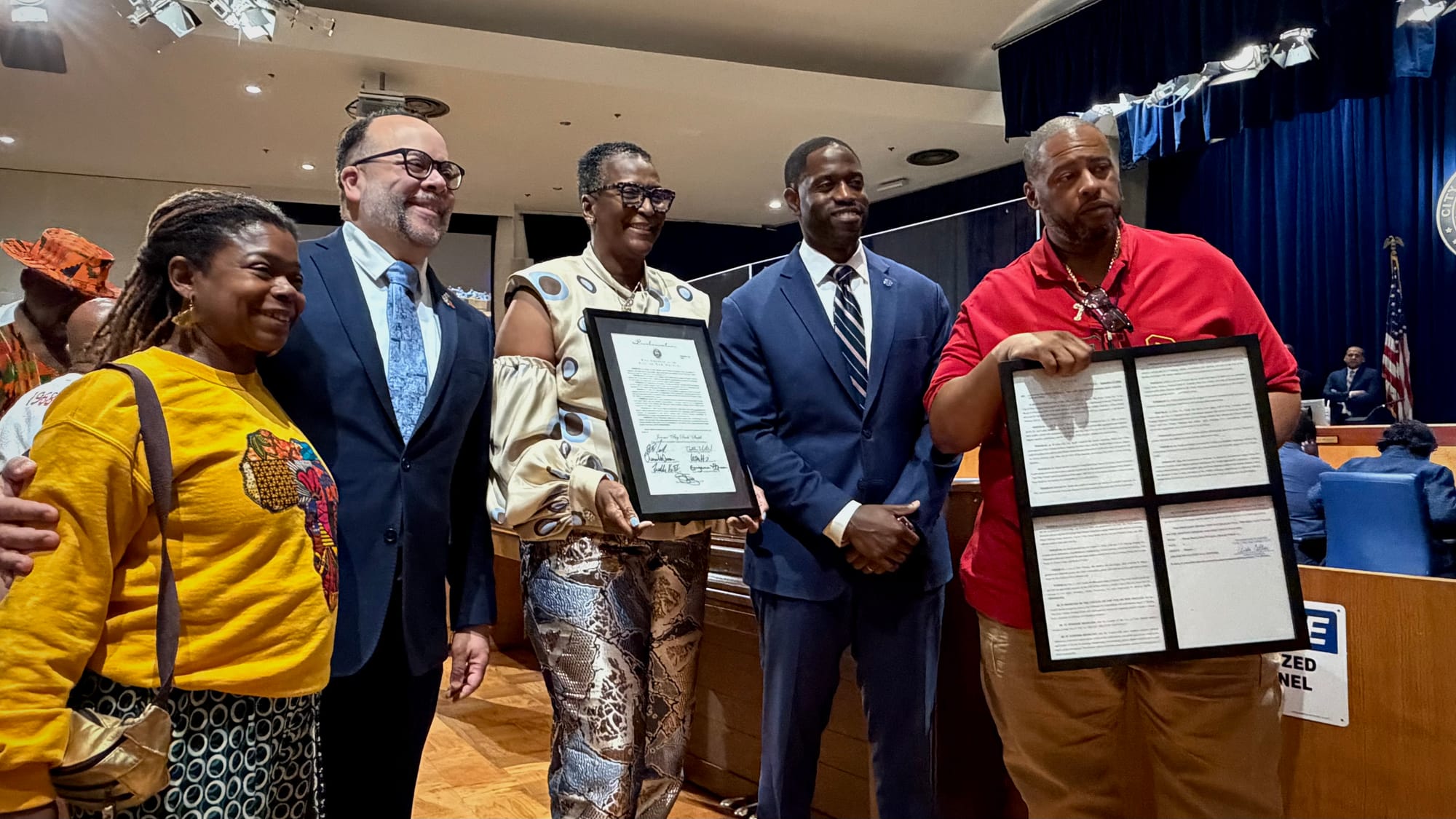
At the meeting, Robert Stanley Sr., the new director of Smith's Tamborine and Fan organization, seated with the family, asked the Council to also rename Hunter's Field for Smith, calling the field part of the group's history. Council President JP Morrell agreed on the record and directed King to begin the process.
"Hunter's Field's a no-brainer," Morrell said. "We're going to take care of it."
The commitment carries weight because Smith helped create the field. According to the resolution, when Interstate 10 construction displaced gathering places along the Claiborne Corridor, Smith organized residents to demand a place for children to play, helping establish what became Hunter's Field. No ordinance to rename it has been introduced, and any change would require a separate vote at a future meeting.
From civil rights activism to generations of children
Smith's influence in New Orleans stretched across more than six decades.
He was a member and organizer with the Congress of Racial Equality, or CORE, in New Orleans, joining the sit-ins, boycotts and direct actions that challenged segregation. In 1961 he joined the Freedom Rides testing segregation in interstate travel across the South, and the renaming ordinance recounts that he endured beatings in McComb, Mississippi. In 1963, the resolution notes, he was among the activists who confronted U.S. Attorney General Robert F. Kennedy over racial violence in the South.
His work did not end when the movement's most visible battles left the national headlines. He turned to children, education, culture and community.
In 1968, Smith co-founded the Tamborine and Fan youth organization with fellow CORE activist Rudy Lombard, based at the same Tremé center that now carries his name. The program taught generations of New Orleans children their history and the city's cultural traditions, from Black Masking Indian practices to brass bands and second lines, while instilling discipline and civic responsibility.
That work is what made the renaming more than ceremony. Neighborhood children followed Smith so closely, the resolution notes, that he earned the name "Big Duck."
Councilmember-at-Large Matthew Willard, whose grandfather was a friend of Smith's, called him "a walking history book" and pressed the chamber on his absence. "Who steps up now?" Willard asked, crediting Tamborine and Fan with giving generations of children "purpose."
A legacy rooted in Tremé
Smith's connection to Tremé stayed visible through the city's final tributes.
He died Aug. 21 at 87. In the weeks after, New Orleanians honored him at places central to his work, the resolution notes, including Tremé, the Seventh Ward, the recreation center and Hunter's Field. A public visitation was held at Gallier Hall on Sept. 11, and a Celebration of Life at the Mahalia Jackson Theater on Sept. 12.
For now, one piece of that legacy is fixed. A recreation center in one of the city's most historically significant Black neighborhoods will carry the name of a man whose work moved from challenging segregation across the South to teaching, organizing and mentoring generations of children in the community he called home.
Kim M. Braud is the Founder & Editor of Evans Cutchmore Press, an independent newsroom covering Louisiana and the Gulf South. Her reporting focuses on government accountability, infrastructure, business, culture, and the public policies that shape communities.
© 2026 Evans Cutchmore Press. All rights reserved.