
GOVERNMENT | NEWS ANALYSIS
A privately run detention center in South Texas is again holding immigrant parents and children. A congressional visit, a Senate report, and the government's own statements describe sharply different conditions. Here is what the documents establish, and what remains contested.
By Kim M. Braud | August 1, 2026
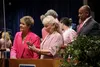
On Tuesday, July 28, a group of House Democrats led by Rep. Joaquin Castro of San Antonio toured the Dilley Immigration Processing Center in South Texas and renewed their call for it to close. Castro was joined by members of the Congressional Democratic Women's Caucus, including Reps. Yassamin Ansari of Arizona, Lizzie Fletcher of Texas, Ayanna Pressley of Massachusetts, and Luz Rivas of California, along with a pediatric physician and immigration advocacy groups.
The visit followed a letter, signed by Castro and more than 100 other House Democrats, urging the Department of Homeland Security to close the facility and end family detention nationwide.
The center they toured is the subject of two very different accounts, depending on which set of documents a reader consults.
What Dilley is, and how it reopened
The facility, officially the Dilley Immigration Processing Center and formerly the South Texas Family Residential Center, sits about 85 miles north of Laredo. It opened in 2014 under the Obama administration, was idled in 2024 after the Biden administration phased out family detention, and reopened in 2025 under a new ICE contract.
It is operated by CoreCivic, the private prison company formerly known as Corrections Corporation of America. The company has said the 2,400-bed facility was purpose-built for ICE in 2014 to house families, and that the new contract runs through at least 2030.
Dilley is the only dedicated family detention center currently operating in the United States.
The 20-day rule at the center of the dispute
Much of the legal argument turns on the Flores Settlement Agreement, a 1997 consent decree that sets minimum standards for immigrant children in federal custody. Courts have interpreted it to require that children held in unlicensed facilities be released or transferred within roughly 20 days.
The government's own data documents part of the picture. As of January 2026, DHS had held more than 900 children in family detention longer than 20 days, and about 270 for more than 40 days, according to figures cited in the Flores litigation.
The agreement itself is now contested. The Department of Justice moved in 2026 to terminate Flores, arguing that newer federal regulations provide sufficient protection for children. The settlement has been partially ended as it applies to the Department of Health and Human Services, but the provisions governing DHS and ICE custody remain in force, overseen by a federal judge in the Central District of California.
What the critics document
Attorneys who represent children in federal detention have visited Dilley repeatedly. In a March court filing, they said conditions had not improved and that nearly 600 children were held longer than 20 days during December and January.
The two sides are not disputing which facility they are describing. They are describing the same center and reaching opposite conclusions about whether its care meets the standards the law sets.
Lawmakers who toured the site on July 28 described accounts of trauma, delayed medical care, limited access to attorneys, and confusion about immigration proceedings. They said they were permitted to interview only one detained child, a 16-year-old.
Dr. Anita Patel, a pediatric critical care physician who joined the delegation, pointed to the American Academy of Pediatrics' long standing opposition to detaining immigrant children, saying the academy considers the medical evidence of harm to be settled. The academy has said family detention causes lasting psychological harm to children regardless of the physical conditions of a facility.
A Senate report released in late July by Sen. Dick Durbin, based on staff interviews with detained families and women, described poor medical care, alleged mistreatment by guards, and food detainees called inedible.
In at least one case, a federal magistrate judge ordered ICE to release a detained family, including five-year-old twins, after a habeas petition.
What the government says
DHS, ICE, and CoreCivic reject the criticisms. In a March 13 court filing, attorneys for DHS said children at Dilley are housed in "safe, sanitary, and appropriate conditions," with compliant medical care, education, recreation, and legal access.
In public statements, the department has said detainees receive proper medical care, three meals a day, clean water, clothing, and schooling, and that a pediatrician is available. DHS has characterized much of the reporting as false.
The department's chief medical officer, Dr. Sean Conley, told ABC News that allegations of denied care are false and that detainees receive timely, appropriate treatment from the moment they enter custody.
The agency has also framed detention as avoidable. In one statement, DHS said "being in detention is a choice," and pointed families toward a government app offering a free flight home.
CoreCivic has said the facility is subject to multiple layers of oversight and complies with applicable detention standards.
Where the accounts diverge
Some points are documented and largely uncontested. The facility reopened in 2025. It is privately operated. It is the only family detention center in the country. And children have at times been held past the 20-day threshold that Flores sets for unlicensed facilities. Those facts come from the government's own data and from court filings.
What remains contested is the adequacy and timeliness of medical care, the safety of the food and water, and whether the detention itself, apart from conditions, causes harm the law is meant to prevent. On those questions, the plaintiffs' filings and the government's filings, submitted to the same court, flatly disagree.
What is next
The Flores litigation continues in the Central District of California, where the government's motion to terminate the agreement and the plaintiffs' enforcement motions remain before the court. Individual families have also pursued habeas petitions, at least one of which has produced a court-ordered release. The number of children held at Dilley has fluctuated, with reporting that the government has quietly released some families even as it defends the facility.
For readers who want to follow the record directly, the primary documents are public: the DHS and ICE statements, the CoreCivic contract terms, and the Flores court docket.
The Dilley dispute is, at its core, a documentary one. Two sets of filings, in the same courtroom, describe the same center in incompatible terms. Which account the law credits is a question the courts, not the press releases, will decide.
Kim M. Braud is the Founder & Editor of Evans Cutchmore Press, an independent newsroom covering Louisiana and the Gulf South. Her reporting focuses on government accountability, infrastructure, business, culture, and the public policies that shape communities. Her work combines investigative journalism, public records research, and documentary storytelling.
© 2026 Evans Cutchmore Press. All rights reserved.