OPINION
By Ani Catherine | July 16, 2026
President Donald Trump spoke to the nation for roughly twenty five minutes from the East Room tonight, arguing that newly declassified intelligence reveals what he called shocking vulnerabilities in American election infrastructure, alleging Chinese interference in the 2020 cycle, and renewing his demand that the Senate pass the SAVE America Act. CNBC reported that fact checkers were contesting the claims before the broadcast ended. NPR reported that Senate Minority Leader Chuck Schumer had spent the afternoon arguing the speech was not about 2020 at all.
Set all of that aside. The most consequential thing said about elections tonight was said hours earlier, at a podium, in the form of a non-answer.
Asked whether the president would accept the results of this November's elections, White House press secretary Karoline Leavitt did not answer. She told reporters to tune in to the speech. NPR reported the exchange. The speech came and went. The question is still open.
That is the whole matter, and it does not require anyone to reach agreement about 2020.
There is a version of this argument that says the country should stop talking about the last election. I am not making it. Grievance about 2020 is a real position held by real voters, and telling them to get over it has failed for six years running because it asks them to concede the premise before the conversation starts. It also lets everyone off the hook. Relitigating the past costs a politician nothing. It is free. There is no vote to take and no promise to break.
So ask for something that costs.
Every candidate on a federal or state ballot in November, every party committee, and every officeholder who intends to comment on the results should state now, in advance, in writing, that they will accept the certified outcome of the races they are in and pursue any dispute exclusively through recounts, audits, and the courts. Not after. Now. Before anyone knows who won.
The objection arrives immediately and it is worth taking seriously: of course I will accept a free and fair election. That formulation is the problem. The qualifier does all the work and it is self administered. Every candidate who has ever refused a result refused it on precisely those grounds. The commitment has to attach to the certified result, determined by the officials and the process the law already names, or it is not a commitment. It is a conditional, and the condition is the candidate's own satisfaction.
A second objection: this is a trap for one side. It is not, and the proof is that it is trivially easy to satisfy. It asks nothing about policy. A candidate can believe every word of Thursday's address, support the SAVE America Act, want documentary proof of citizenship and an end to mail voting, and sign this sentence without contradicting a syllable of it. Election security and election finality are not in tension. The bill is about the rules going in. The commitment is about the arithmetic coming out. Anyone who tells you these are the same thing is telling you they want a rule that decides the outcome.
And it binds symmetrically. If Democrats win the House in November, as polling currently suggests, this asks the losing side to concede. If the polling is wrong, it asks the same of the other. Whoever finds that harder to sign has told you something.
Here is what the ask is actually for. Once a candidate has said it, in public, before the count, every subsequent objection has a fixed reference point. Refusal becomes visible. Silence becomes an answer. Right now a candidate can spend six months seeding doubt and then declare on election night that this specific count happens to be the fraudulent one, and there is nothing on the record to hold it against. The commitment does not stop anyone from lying. It makes the lie legible, and it makes it cost something, which is more than any of the last six years of argument has managed.
Reporters should ask the question at every forum until every candidate has answered it on tape. Voters should notice who answers and who changes the subject. And the ones who sign it should be held to it in November, including by the people who wanted them to win.
Ask now. The answers are cheapest before anyone knows what they are worth.
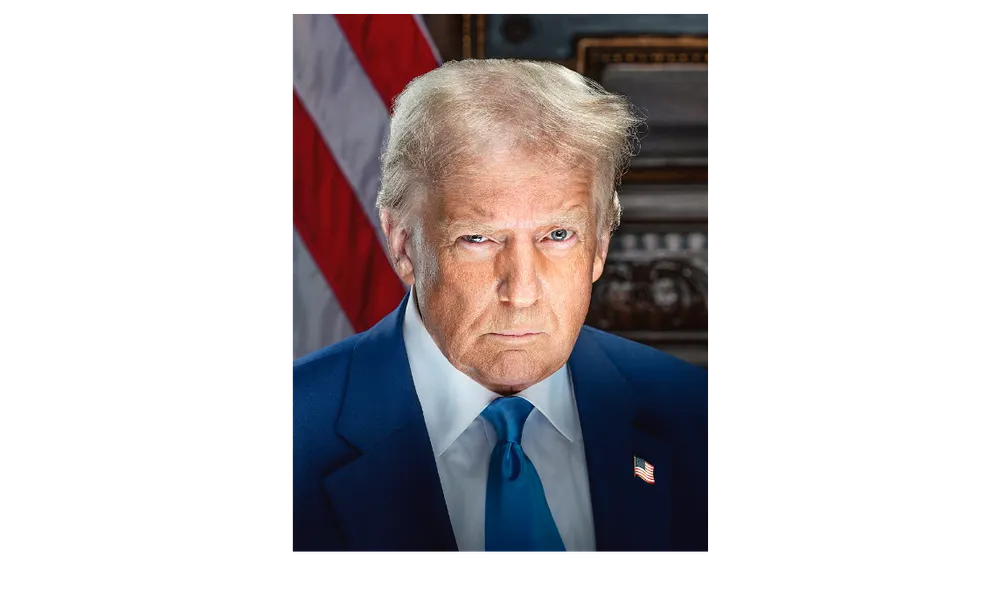
Official White House Photo by Daniel Torok. Library of Congress, LC-DIG-ppbd-11614
Ani Catherine writes where power is exposed rather than explained. Her work examines history, public memory, identity, and institutional authority with a focus on what is preserved, what is erased, and who benefits from the distinction. Through commentary and analysis, she explores government, culture, religion, race, and systems of influence with a commitment to evidence, accountability, and historical context. She believes language is never neutral, memory is never accidental, and silence is often policy. Staff Writer.
© 2026 Evans Cutchmore Press. All rights reserved.