
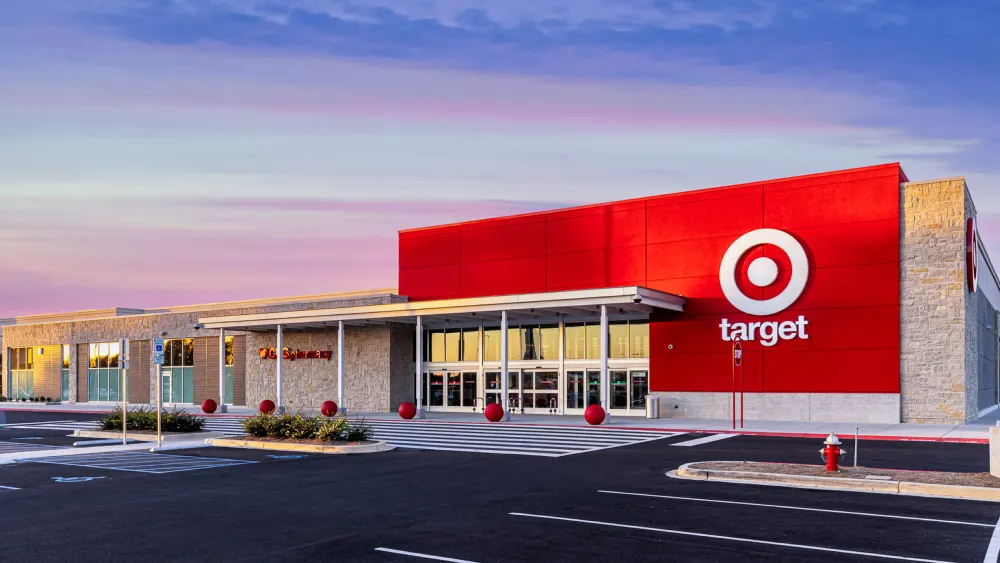
Target’s retreat from racial equity commitments coincided with its worst business performance in years. The correlation matters.
Ani Catherine | February 1, 2026
April 7, 2021: Target CEO Brian Cornell stands before investors and announces a $2 billion commitment to Black-owned businesses by 2025. “We have a rich history of working with diverse businesses, but there’s more we can do to spark change across the retail industry,” he declares. The promise is specific: more than 500 Black-owned brands on shelves, multi-million-dollar contracts with Black suppliers, a new Forward Founders accelerator program to help Black entrepreneurs scale their businesses.
January 24, 2025: Target announces it is ending its three-year DEI goals, discontinuing programs focused on Black and minority-owned businesses, and stopping external diversity reporting. The $2 billion commitment, due at the end of 2025? Abandoned. The Forward Founders program that had supported 60+ diverse entrepreneurs? Discontinued. The CEO who called George Floyd’s murder personal because it happened blocks from Target’s Minneapolis headquarters? Announcing his resignation, effective February 2026.
The cost of this reversal? Target’s stock is down as much as 32% over the past year. Foot traffic declined for 11 straight weeks after the announcement. Sales are down. The company is in full crisis mode with activist investors circling and a new CEO taking over. And Black entrepreneurs who fought their way onto Target’s shelves are left in an impossible position: defending a company that just abandoned them, begging consumers not to boycott because it would hurt them, not Target.
Following the Money
Target’s 2021 commitment wasn’t vague corporate-speak. The company pledged to invest $2 billion with Black-owned businesses by the end of 2025, including adding products from more than 500 Black-owned vendors across every major category. They promised to spend more with Black-owned suppliers, marketing agencies, construction companies, facilities maintenance providers. They created Forward Founders, an accelerator program to engage Black entrepreneurs early in their journey. They launched a $25 million Roundel Media Fund specifically for Black, Indigenous, and people of color brands.
A year later, in May 2022, Target reported progress. The company had increased spending with Black-owned companies by more than 50% compared to 2020. Black-owned brand offerings had more than doubled to over 100 brands. Christina Hennington, Target’s executive vice president and founding member of the Racial Equity Action and Change (REACH) committee, assured stakeholders: “We are on track to meet the goals we established.”
That was the last detailed public update on the $2 billion commitment.
When the Numbers Started Deteriorating
Target’s 2025 Sustainability and Governance Report, published in October, told a different story, not through what it said, but through what it didn’t say and what the numbers revealed.
Diverse supplier spending was collapsing. Tier 2 diverse supplier spend, where many Black-owned firms operate under subcontracting relationships, fell 66% in just two years, from $709 million in 2022 to $238 million in 2024. Tier 1 U.S. diverse supplier spend dropped from $3.08 billion to $2.93 billion during the same period.
Even more telling was what happened inside the company. Black representation in management positions declined 4 percentage points over two years, even as Black employees made up 16% of the frontline workforce. The pathway from frontline to leadership was closing.
The report’s language had shifted too. Mentions of “diversity” dropped 20 from the previous year. References to “Black” in relation to people fell by three. Meanwhile, Target doubled down on owned brands , the private-label products that capture shelf space but squeeze out third-party suppliers, including Black-owned brands.
There was no concrete update on the total amount spent toward the $2 billion commitment. No accounting of how much remained. No timeline for completion. Just silence where transparency had been promised.
The Rollback
On January 24, 2025, days after President Trump signed executive orders targeting federal DEI programs, Target announced sweeping changes. The company would end its three-year DEI goals, stop participating in external diversity surveys including the Human Rights Campaign’s Corporate Equality Index, and discontinue programs focused on carrying more products from Black and minority-owned businesses. The “supplier diversity” team became the “supplier engagement” team, dropping any specific focus on race.
Target framed the changes as “realignment” and refocusing on “business neutrality.” CEO Brian Cornell remained largely silent in public, though he did meet with Rev. Al Sharpton and Pastor Jamal Bryant in April after Bryant launched a national boycott. At that meeting, according to Bryant, Cornell pledged to honor the original $2 billion commitment by July 31, 2025. But the infrastructure built to support that commitment, the Forward Founders program, the supplier diversity team, the REACH committee, had been dismantled.
In July, Cornell published an open letter in Essence during the Essence Festival. “This year, we will complete our commitment to invest $2 billion in Black-owned businesses, more than doubling the number of Black-owned brands on our shelves,” he wrote. No specifics. No accounting. Just assurance from a CEO already planning his exit.
By August, Target announced Cornell would step down as CEO in February 2026, transitioning to executive chairman. His replacement: Michael Fiddelke, a 22-year Target veteran and current COO, ensuring internal continuity of the new direction.
The Business Consequences
Here’s what makes Target’s story particularly instructive: the company’s “business-focused” pivot away from DEI coincided with its worst business performance in years.
Stock performance has been brutal. Target shares are down between 22% and 32% over the past year, depending on the measurement period. The stock hit a 52-week low of $83.44 and now trades around $105–106, making it one of the worst performers in the S&P 500.
Sales declined 0.8% in fiscal 2024 to $106.6 billion. Comparable sales grew only 0.1% for the year. Fourth-quarter 2024 sales were 3.1% lower than the previous year. By the first quarter of fiscal 2025, comparable sales had fallen 4.4%.
Consumer response was measurable. Foot traffic declined for 11 consecutive weeks following the DEI rollback announcement. March 2025 foot traffic was down 6.5% compared to the prior year. Brand favorability dropped 9% according to industry surveys.
Meanwhile, companies maintaining strong DEI commitments told a different story. Costco’s shareholders voted 98% to reject a proposal to review the risks of maintaining DEI initiatives. The company’s board argued that diversity drives innovation and helps them serve customers better. Costco’s March 2025 foot traffic was up 7.5% year-over-year.
Sephora, a member of the 15 Percent Pledge committed to dedicating 15% of shelf space to Black-owned brands, increased Black-owned brand representation from 3% in 2020 to 10% by 2025. Artemis Patrick, president and CEO of Sephora North America, was direct about the results: “Our business is really good and the fact that we’ve been really focused on diversifying our assortment, I think there’s a strong correlation.”
Target is now in full turnaround mode, with an “enterprise acceleration office” focused on efficiency, a new CEO taking over, activist hedge funds making “significant” investments, and corporate layoffs underway. Analysts openly question whether an internal CEO appointment can address what one called “the entrenched groupthink and inward-looking mindset that have plagued Target for years.”
Through it all, Brian Cornell’s personal compensation tells its own story: $77.5 million in 2020 when the commitments were made, declining to $20.4 million in 2024 as they were abandoned, though that 2024 figure still represented a 6.25% increase from the prior year despite the company’s struggles.
The Impossible Choice
Perhaps the cruelest aspect of Target’s rollback was the position it created for Black entrepreneurs who had fought their way onto the retailer’s shelves.
Eleven-year-old Zoe Oli, founder of Beautiful Curly Me doll brand, posted a plea on Instagram: “If you don’t buy our products in Target, they will cancel us from their shelves and make us buy back the products they already purchased from us.” She emphasized her team’s hard work and asked supporters to keep shopping.
The Lip Bar founder Melissa Butler, Brooklyn Tea founder Jamila McGill Wright, Afro Unicorn CEO April Showers, and actress Tabitha Brown all echoed similar messages: Don’t boycott Target. Keep buying Black-owned brands. Strategic shopping, not abandonment, was the only path forward.
“We have worked so hard and spent so much to be here, and we need your support to be successful in retail so we can scale,” Oli wrote.
Wright was even more direct about the structural reality: “Representation matters, so we will have to be even more deliberate about supporting brands that are important to us. I hope companies like Walmart and Target continue to support Black-owned brands that have earned their space on shelves.”
That phrase, “earned their space”, captures the fundamental injustice. These entrepreneurs didn’t get shelf space because of DEI programs. They earned it through product quality, consumer demand, and business performance. Yet they found themselves defending a company that was simultaneously claiming diversity initiatives were no longer business priorities.
The infrastructure gap makes their position untenable. Black entrepreneurs don’t have alternative distribution networks at Target’s scale. Without access to Target’s established logistics, these businesses must independently shoulder higher costs for advertising, warehousing, and shipping. Those increased costs make their products less competitive, putting them right back where they started, or worse.
Some Black-owned brands have already reported losing shelf space in certain Target locations, though the company hasn’t confirmed an official supplier policy change. The pattern is clear enough: what DEI initiatives built; their absence is eroding.
What Corporate Commitments Are Worth
Target’s trajectory from $2 billion commitment to wholesale abandonment reveals something essential about corporate promises made during moments of crisis.
There was never any independent verification of progress toward the $2 billion goal. No quarterly reporting with audited figures. No third-party oversight. No contractual obligations. No consequences for falling short or walking away entirely. The commitment existed entirely within Target’s own reporting structure, measured by Target’s own metrics, on Target’s own timeline.
When the political environment shifted, so did the commitment. The company that had been “on track” to meet its goals in 2022 offered no final accounting in 2025. Brian Cornell’s Essence letter asserted completion without providing documentation. The CEO who built his legacy partly on racial equity initiatives got to resign on his own terms, transitioning to an executive chairman role with a handpicked internal successor.
This isn’t unique to Target. McDonald’s, Amazon, Meta, Walmart, and dozens of other corporations made similar commitments in 2020 and 2021, then quietly scaled them back when the urgency faded and the political calculus changed. But Target’s case is particularly instructive because we can see the business costs of abandonment in real time.
The lesson isn’t that corporations shouldn’t make commitments to racial equity and economic opportunity. It’s that commitments without accountability mechanisms aren’t commitments at all, they’re marketing.
Real commitments require transparent quarterly reporting with specific metrics. They require independent verification of progress. They require contractual obligations to suppliers and partners. They require consequences for non-performance built into executive compensation and board oversight. They require institutional structures that survive political cycles and leadership transitions.
Target’s story is a case study in what happens without those safeguards. A $2 billion promise cost the company nothing to make and, apparently, nothing to break. The costs showed up elsewhere: in the stock price, in the sales figures, in the foot traffic decline, in the leadership exodus. Most painfully, the costs showed up in the voice of an 11-year-old entrepreneur begging people to keep shopping at a store that no longer wants her there.
That’s the real price of commitments without accountability. And it’s paid by the people who believed them.
Photo Credit: Target Corporation
Ani Catherine writes where power is exposed rather than explained. Her work examines history, public memory, identity, and institutional authority with a focus on what is preserved, what is erased, and who benefits from the distinction. Through commentary and analysis, she explores government, culture, religion, race, and systems of influence with a commitment to evidence, accountability, and historical context. She believes language is never neutral, memory is never accidental, and silence is often policy. Staff Writer.