NEWS
By Kim M. Braud | September 10, 2026
NEW ORLEANS - New Orleans officials are preparing for another difficult budget year, telling Westbank residents Thursday night that the City expects approximately $768 million in 2027 revenue as the Moreno administration attempts to bring recurring spending in line with recurring income while protecting basic services.
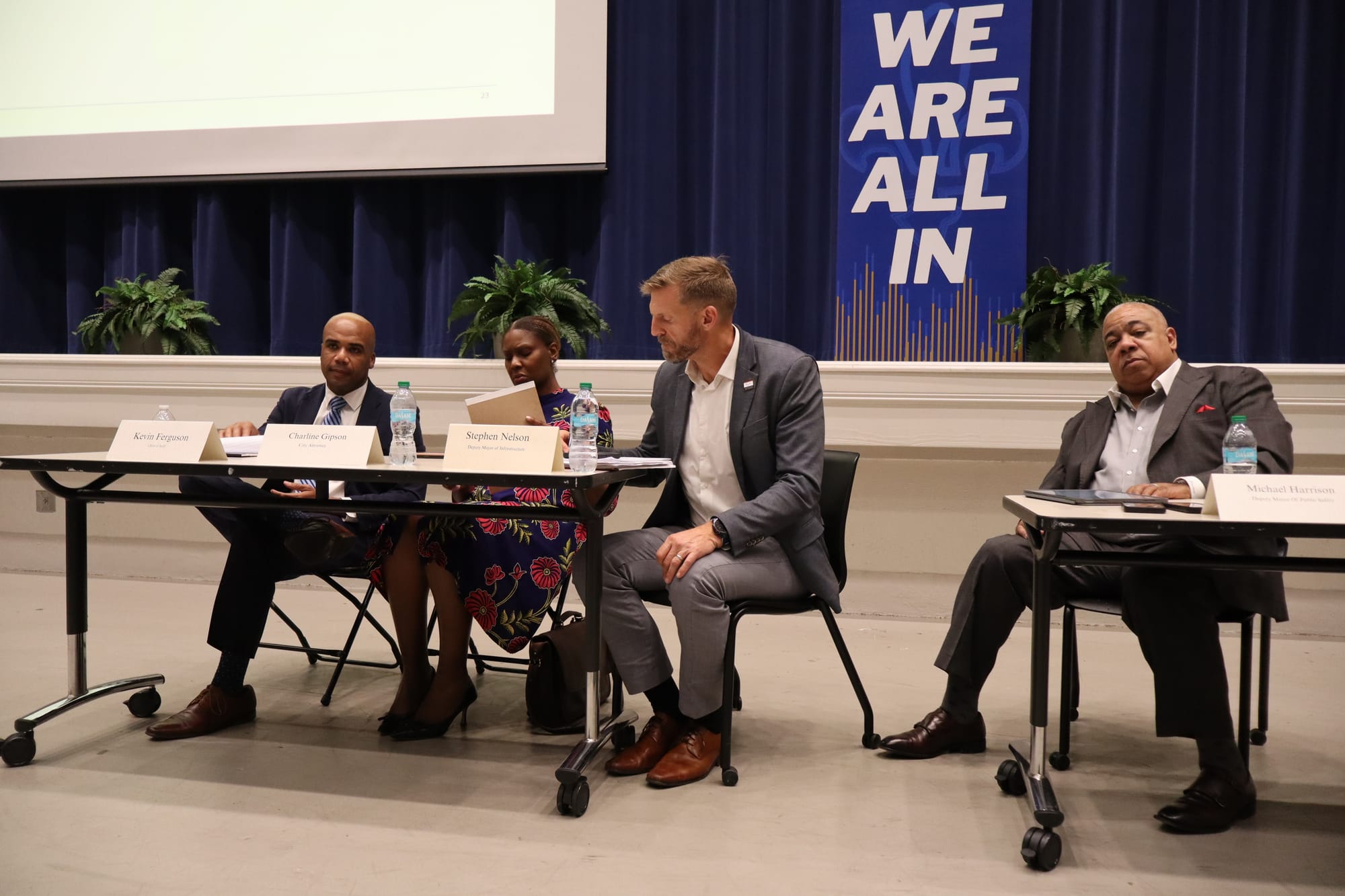
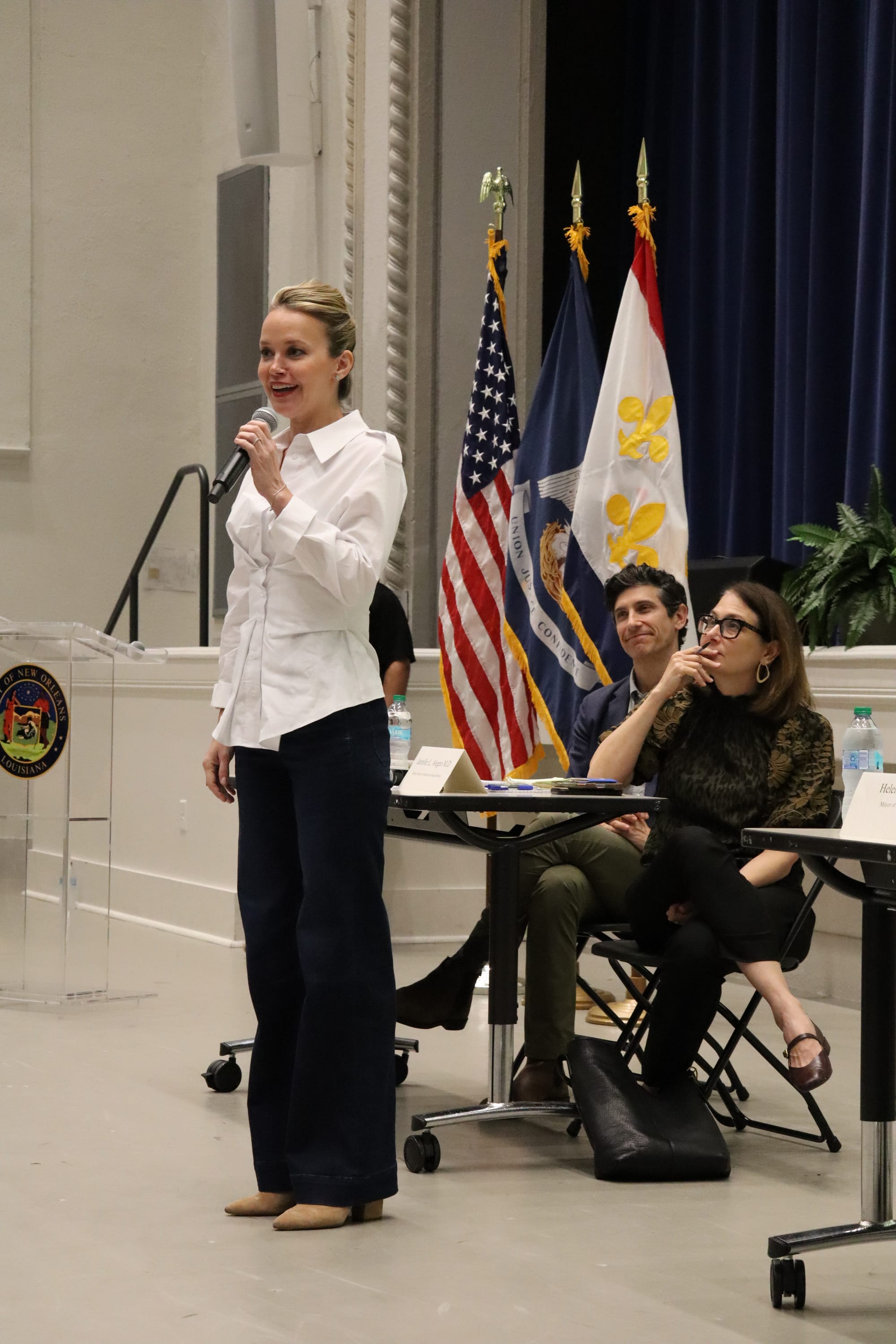
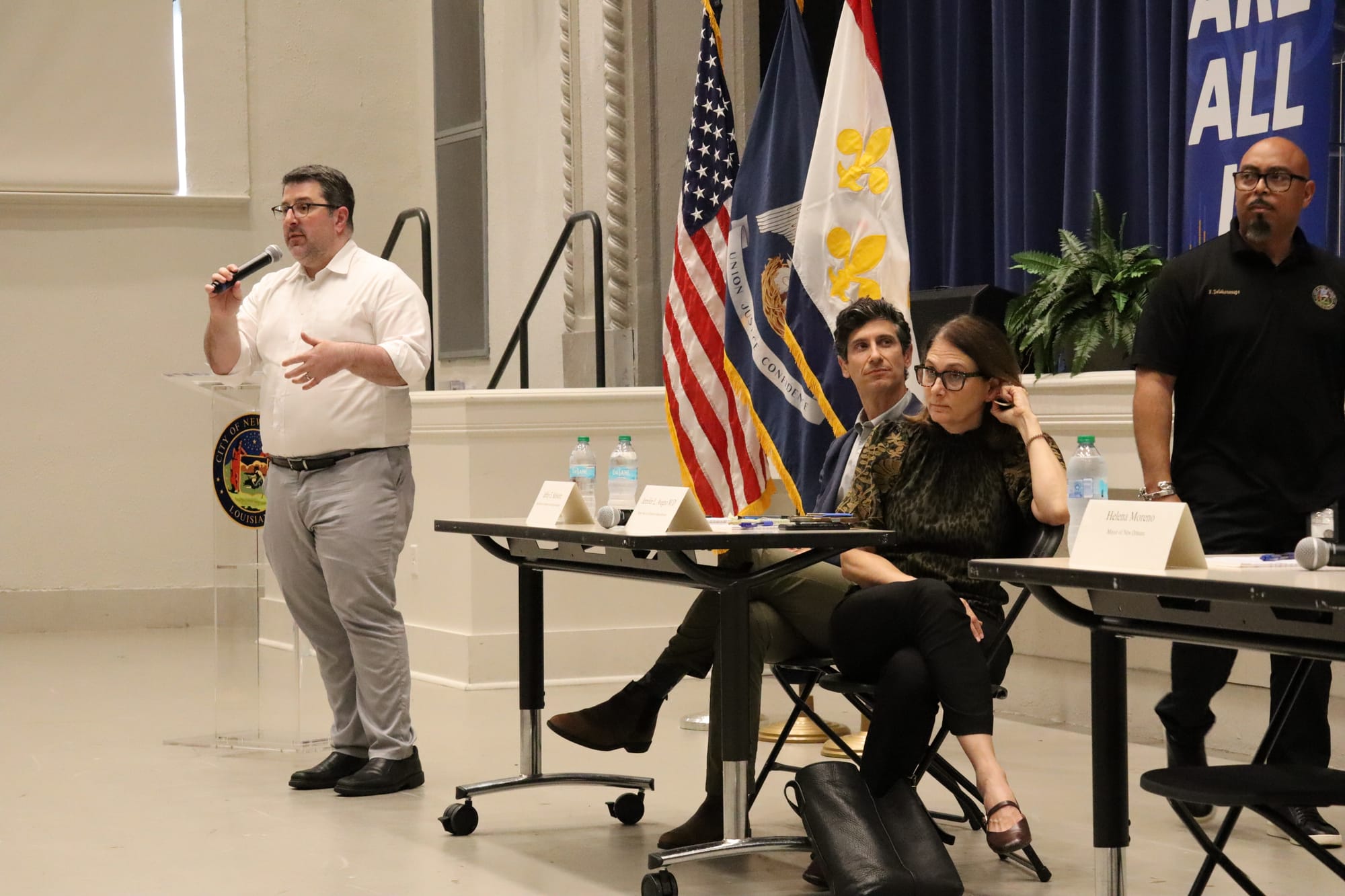
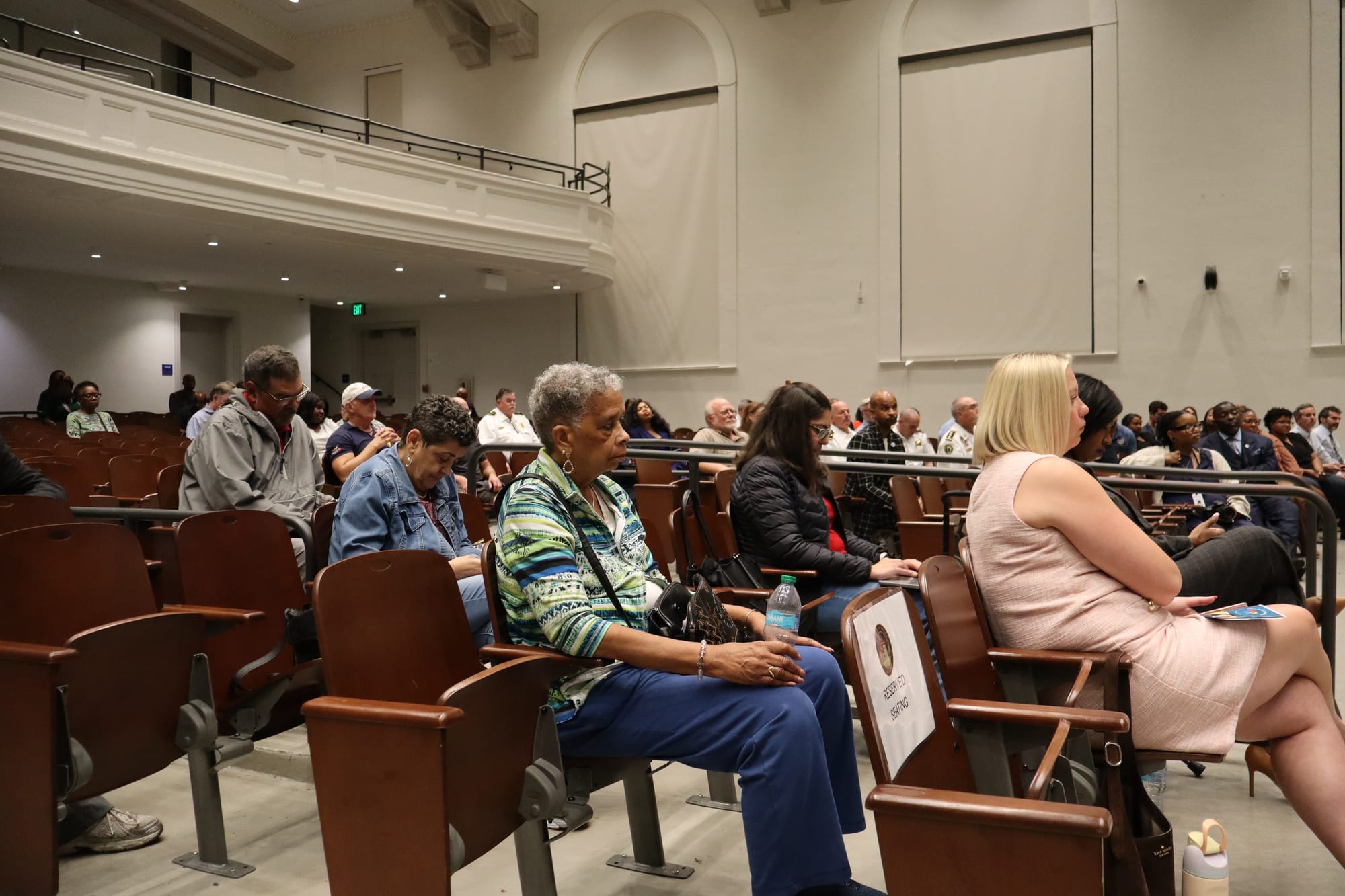
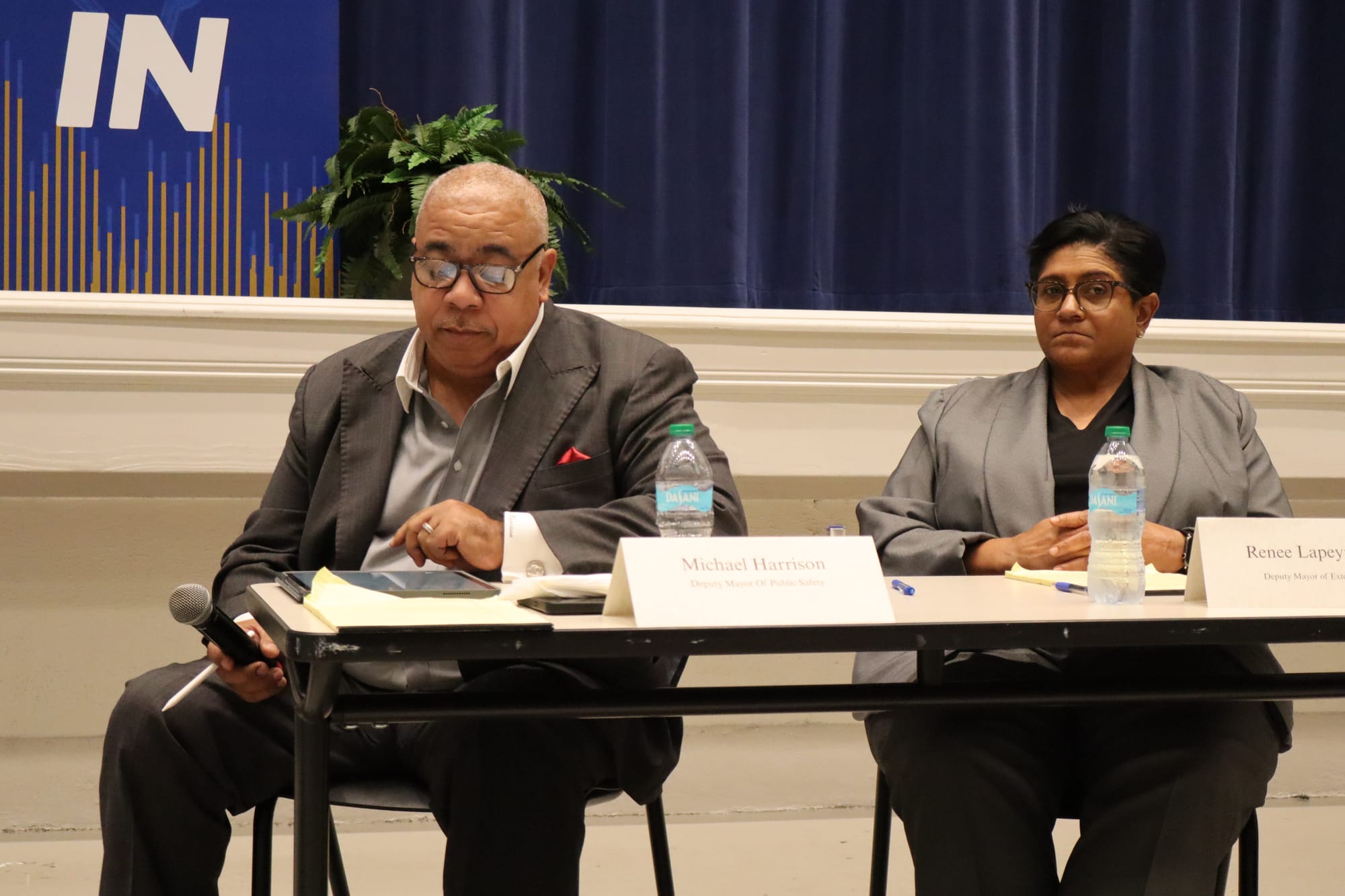
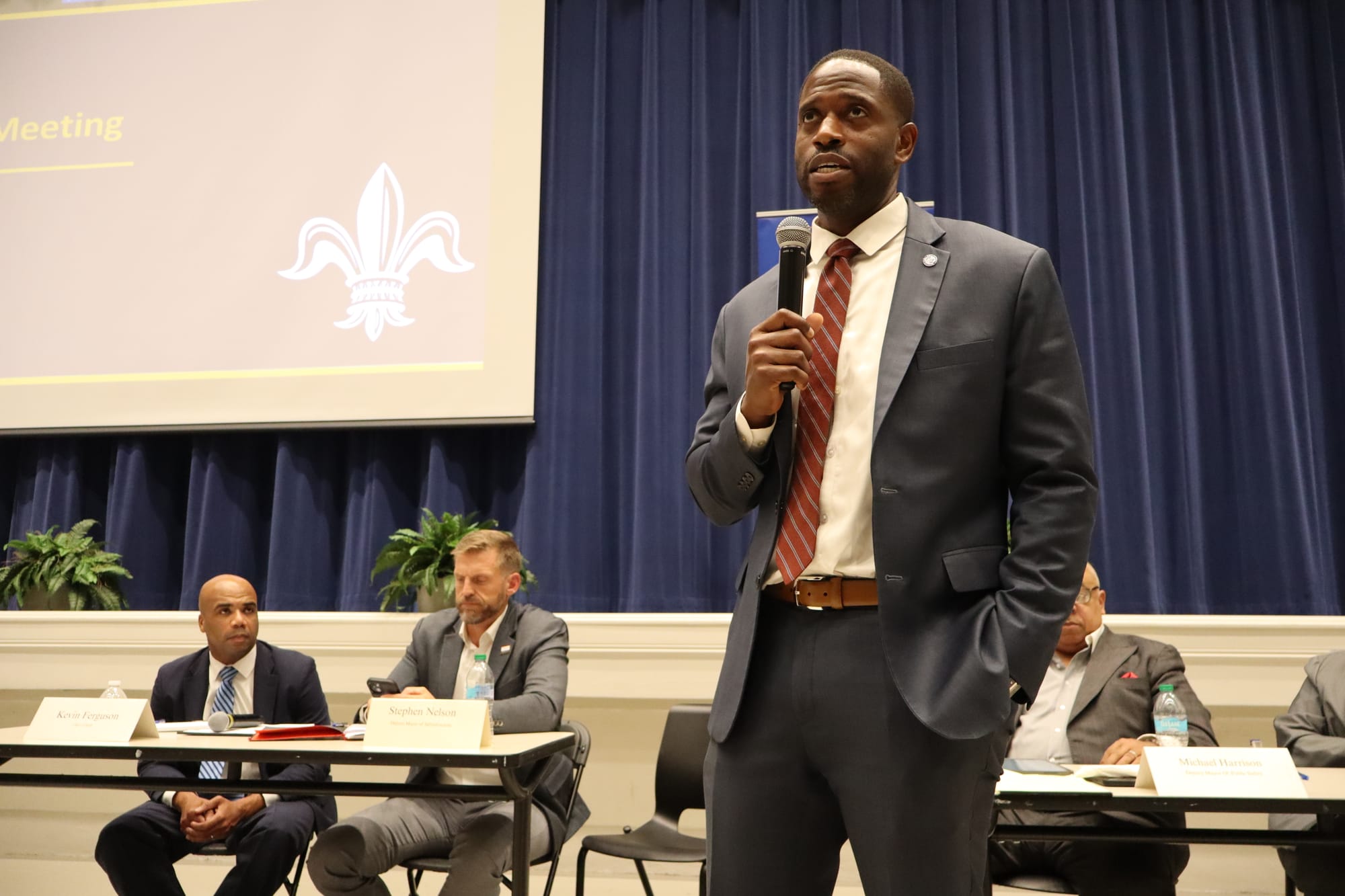
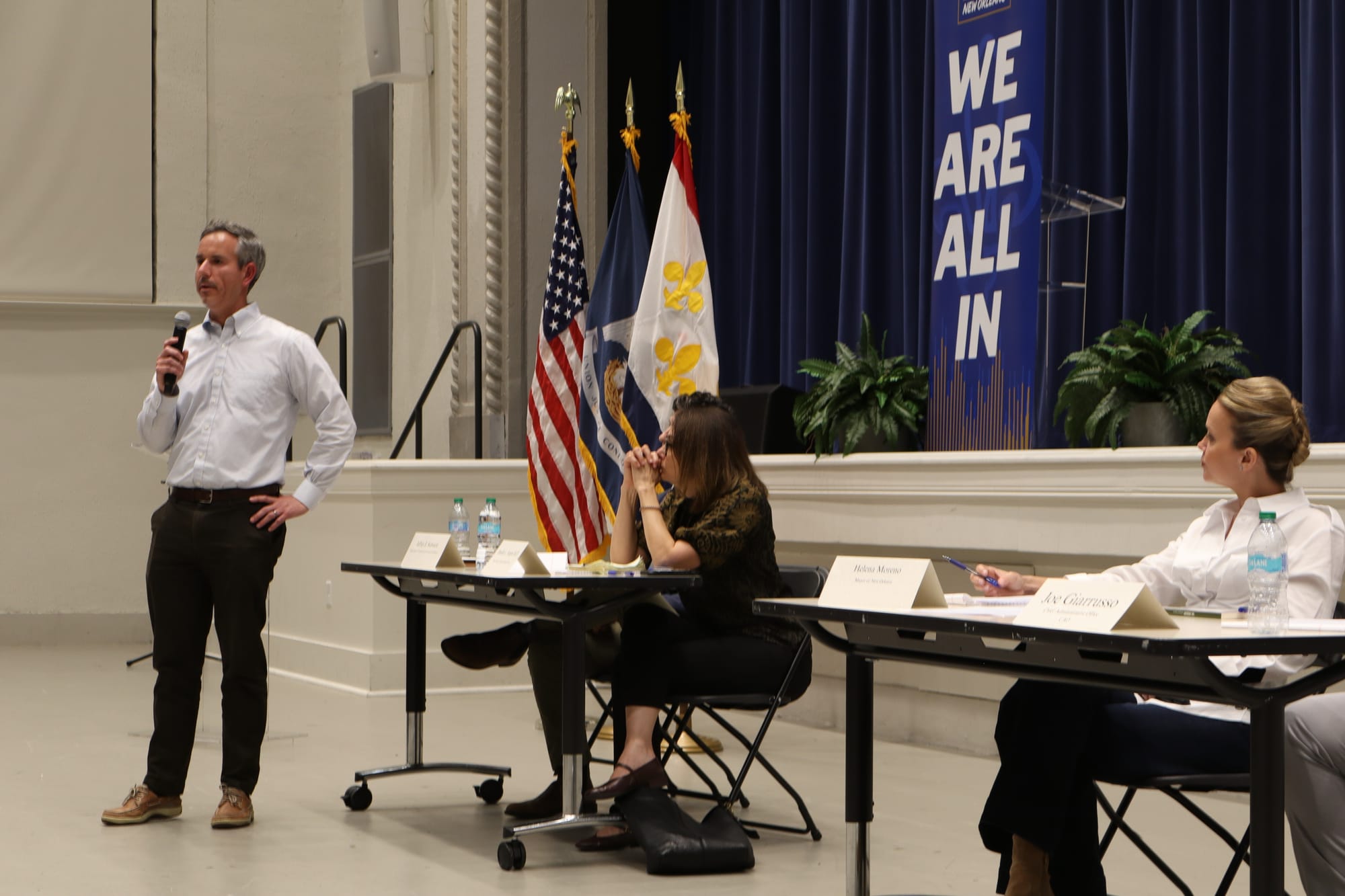
The financial outlook framed the September 10 District C community budget meeting at Martin Behrman Charter School in Algiers, where residents questioned Mayor Helena Moreno and senior administration officials about deteriorating streets, heavy truck traffic, sanitation costs, transportation, traffic safety, public facilities and animal services.
The administration's presentation described 2027 as the next phase of a broader financial restructuring that began after Moreno took office.
According to the presentation, the City entered 2026 with spending that had grown beyond sustainable recurring revenues, depleted cash reserves, significant financial obligations and deferred costs from previous years, and little room for unexpected expenses.
The administration says actions taken during 2026 stabilized the immediate crisis. Those measures included reducing spending, protecting payroll and cash flow, identifying additional revenues, increasing scrutiny of contracts and expenditures and beginning to "right-size" city government.
The City also said more than $100 million in upfront payments from the casino lease helped replenish its depleted fund balance and restore reserves.
But officials cautioned that those measures did not solve the underlying structural problem.
One presentation slide summarized the administration's position: "We stabilized the crisis. Now we have to fix the structure."
A Difficult 2027 Equation
The administration presented approximately $768 million in projected 2027 revenue, while showing roughly $975 million in prior-year spending levels.
The presentation cautioned that the City's revenue estimate is approximately $100 million below prior-year spending levels and said further spending reductions will be required to produce a balanced budget.
The $975 million figure should not be interpreted simply as a $207 million operating deficit. The City's presentation identifies expenses affecting the comparison, including a $125 million Revenue Anticipation Note repayment, debt service, terminal leave and retention pay, and previously uncovered health insurance costs.
The administration's stated goal for 2027 is to align recurring spending with recurring revenue, rather than rely on one-time funding to cover ongoing expenses.
"Our goal isn't simply to balance one budget," the presentation stated. "It is to permanently change the financial trajectory of New Orleans."
Chief Administrative Officer Joe Giarrusso also explained that not all money available to the City can be used interchangeably.
The General Fund supports core day-to-day operations and services. Capital funds are generally reserved for major, long-term investments such as streets, buildings, parks and infrastructure and cannot ordinarily be used to cover recurring operating expenses. Grants, dedicated taxes and other restricted funds must generally be spent for their designated purposes.
That distinction, officials argued, is central to understanding why the City can have money available for certain construction or infrastructure projects while simultaneously facing pressure in its operating budget.
City Says It Will Change How Government Operates
Rather than addressing the 2027 financial challenge exclusively through across-the-board reductions, the administration says it intends to restructure how city government operates.
The presentation identified several approaches: consolidating functions where possible, reducing administrative overhead, reviewing contracts and outside spending, strengthening overtime controls, modernizing outdated processes, improving collection of money owed to the City, making better use of underused city assets and measuring departmental performance.
The administration said its objective is to direct more resources toward frontline services.
Approximately $100 million annually from the General Fund also goes to outside agencies including the Orleans Parish Sheriff's Office, District Attorney and Orleans Parish courts, according to the presentation.
Moreno's stated 2027 priorities include transformative streets and infrastructure, safer neighborhoods, more opportunities through NORD, economic development and cleaner, more functional neighborhoods.
Streets Dominate the Westbank Conversation
Those priorities quickly became local when residents were given the microphone.
Street conditions were among the most persistent concerns.
One Algiers resident described years of heavy 18-wheelers traveling through her residential neighborhood. She told officials that residents have repeatedly complained about the trucks and believe the traffic and resulting vibrations have contributed to street deterioration and damage to their homes.
Another resident questioned the practice of repeatedly filling potholes when entire stretches of pavement have deteriorated.
Moreno said the administration is trying to move beyond a pothole-by-pothole approach by building greater street-maintenance capacity inside city government.
According to the City's presentation, crews have addressed 12,504 streetlight issues, filled potholes across 970 blocks, completed road repairs across 47 blocks and performed sidewalk repairs across 23 blocks.
The administration also says it is hiring 50 additional employees using existing infrastructure funding to expand repair capacity.
Moreno said the next stage includes increasing mill-and-overlay work that can rehabilitate multiple blocks rather than repeatedly patching individual failures.
The City also says it has begun bringing Sewerage & Water Board and Department of Public Works resources together to better coordinate street, drainage, water and sewer projects.
District C Investments Highlighted
The administration used the Westbank meeting to highlight several investments specifically affecting District C.
The presentation identified DeGaulle Manor, Morris F.X. Jeff Jr. Stadium and Tullis Drive as strategic investments in the district.
DeGaulle Manor has been a longstanding redevelopment issue in Algiers, while the administration presented the Morris F.X. Jeff Jr. Stadium and Tullis Drive projects as examples of infrastructure and community investments underway on the Westbank.
The administration also highlighted its broader economic-development strategy, including redevelopment efforts involving the former Naval Support Activity site, the former Charity Hospital, the former Lindy Boggs Medical Center and commercial corridors in New Orleans East and along Canal Street.
Moreno told the audience that additional investment announcements are coming.
The mayor said the City expects to announce more than $100 million in private investment over the coming weeks involving healthcare, advanced manufacturing and technology.
Residents Question Whether the City Maintains What It Builds
Residents also raised a different infrastructure question: what happens after projects are completed?
One Algiers Point resident pointed to maintenance problems at public facilities and questioned whether sufficient money is being planned for the long-term upkeep of buildings, elevators, escalators and other infrastructure.
The concern underscored a distinction that appeared throughout the City's own presentation. Building something and maintaining it do not necessarily come from the same funding source.
Residents repeatedly pushed officials to consider maintenance as part of the City's long-term financial planning rather than waiting until infrastructure fails.
Traffic Enforcement and Safer Streets
Traffic safety was another recurring Westbank concern.
Moreno said NOPD has resumed enforcement of speeding and red-light violations after a period in which traffic enforcement had declined.
The administration is also developing a Safe Streets Initiative to examine dangerous streets and intersections and determine whether additional signage, crosswalks or other improvements are needed.
Moreno said the City has also been addressing traffic signals that repeatedly malfunction during rain events because of water intrusion.
Rather than continuing to dispatch employees to reset signals after every storm, she said the administration wants to repair the underlying problems and ultimately modernize the system so some traffic-signal functions can be managed remotely.
Residents were encouraged to report malfunctioning traffic signals through 311.
Sanitation Increase Remains a Concern
The recently approved sanitation fee increase also came up during the meeting.
Moreno acknowledged that the increase is unpopular and said she disliked having to impose it.
She explained that changes to sanitation service following Hurricane Ida included higher wages intended to stabilize the sanitation workforce, new equipment requirements and the transition from twice-weekly to once-weekly garbage collection.
But Moreno said two benefits have not been communicated adequately.
Residents can request a second garbage cart at no additional charge, she said, while qualifying low-income residents age 65 and older can have their sanitation charge capped at $10 per month.
Residents needing a second cart were directed to 311, while qualifying seniors can apply for the reduced rate through the Sewerage & Water Board.
Moreno acknowledged the City's communication surrounding those programs had fallen short.
"If you're not getting the information, guess what? I failed," Moreno told residents.
NOLA Public Schools Warns of Enrollment Pressure
The evening also brought a warning from NOLA Public Schools Superintendent Dr. Fateama Fulmore.
Fulmore highlighted recent academic gains but said declining enrollment is creating financial pressure that could lead to school closures, consolidations, mergers or other transitions.
She told residents that each student a school expects but who does not enroll represents approximately $12,000 in lost funding, affecting academics, extracurricular programs, athletics and other services.
The district is preparing what Fulmore described as a six-point strategy for "right-sizing" the school system while protecting academic quality and improving financial sustainability.
Transportation was also raised because New Orleans' school-choice model can require students to travel considerable distances across the city.
Fulmore said the district has worked to limit the amount of time students spend on buses while schools examine route consolidation, neighborhood hubs and other transportation efficiencies.
Animal Services Enter the Budget Discussion
The future of animal services also emerged during public comment.
Responding to an animal advocate, Moreno said the administration is working through its relationship with the Louisiana SPCA and wants rescue organizations and other animal advocates involved in discussions about possible solutions.
Moreno said donations made directly to the Louisiana SPCA do not automatically provide funding for municipal animal-control responsibilities such as responding to stray animals.
She invited the resident who raised the issue to participate in future discussions with administration officials.
What Residents Want Protected
The City's presentation ended with a broad commitment: better streets, reliable water and drainage, safer neighborhoods, more opportunities for children, greater economic opportunity, cleaner neighborhoods and a financially stable city.
But the District C meeting illustrated the challenge hidden inside those goals.
New Orleans is entering a budget process in which officials say recurring spending must be brought in line with recurring revenue and additional reductions are still necessary. At the same time, Westbank residents are asking for more, not necessarily more government, but more reliable government.
They want streets maintained before they fail, traffic signals that work when it rains, public buildings maintained after ribbon cuttings, sanitation residents can afford, safer transportation and city agencies that respond before residents spend years reporting the same problem.
Moreno told the audience that community input will help determine how the administration makes those choices.
For District C, Thursday night's message was equally clear: as City Hall decides where to cut and where to invest, Westbank residents expect basic services to remain at the center of the 2027 budget.
Kim M. Braud is the Founder & Editor of Evans Cutchmore Press, an independent newsroom covering Louisiana and the Gulf South. Her reporting focuses on government accountability, infrastructure, business, culture, and the public policies that shape communities.
© 2026 Evans Cutchmore Press. All rights reserved.