BUSINESS | NEWS
Two continental championships that decide who represents the Americas in Lyon will be staged in New Orleans this weekend, inside a convention center hall most of the city will drive past without noticing.
Kim M. Braud | July 22, 2026
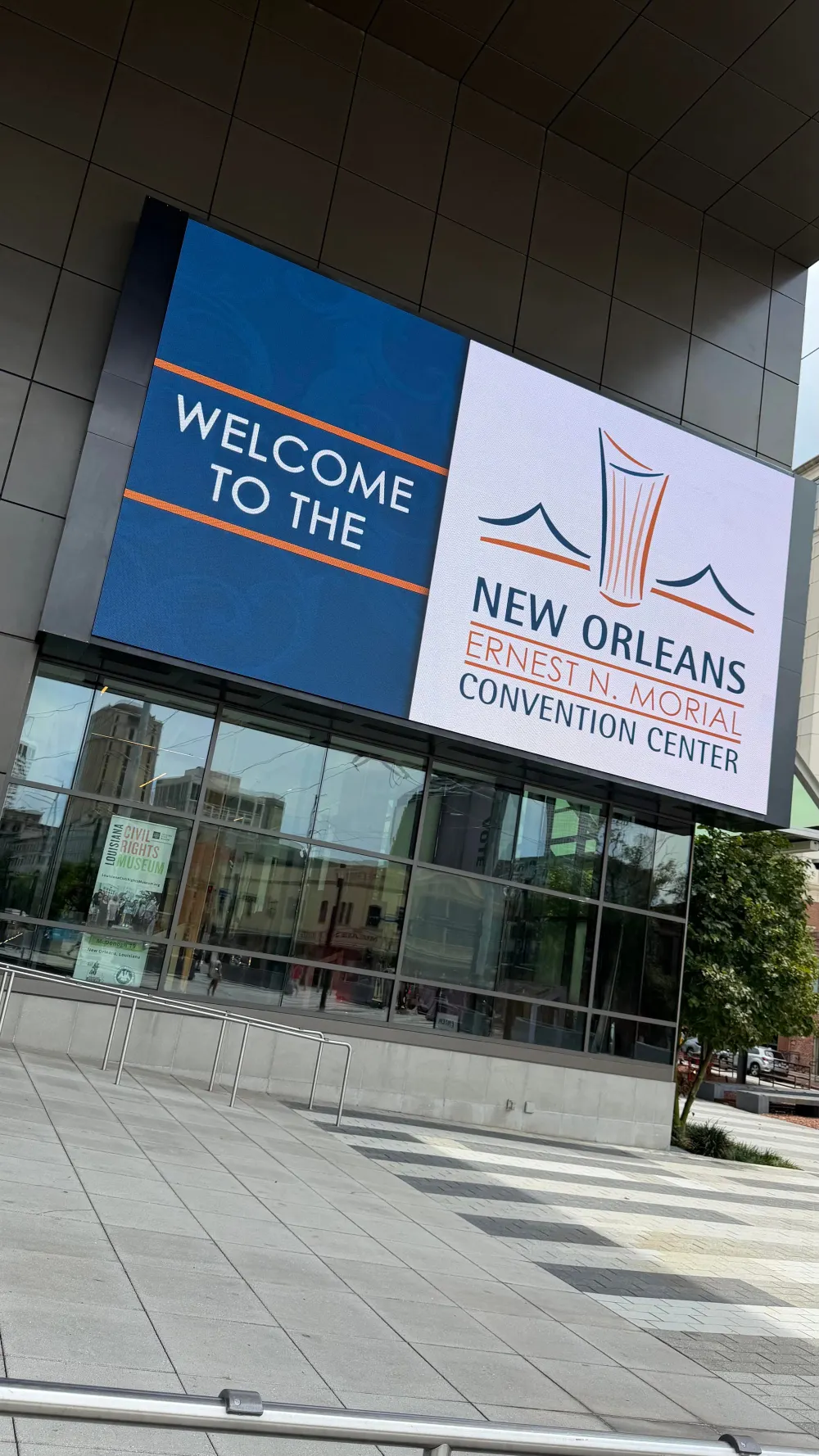
On Saturday, July 25, the Americas selection of the Sirha Coupe du Monde de la Pâtisserie, the Pastry World Cup, runs at the Ernest N. Morial Convention Center. On Sunday, July 26, the Bocuse d'Or Americas follows in the same building. Winners advance to the grand finals in Lyon, France, in 2027.
Both events sit inside the 73rd annual Louisiana Restaurant Association Showcase, the Gulf South's largest hospitality trade show, which the LRA says draws more than 6,000 industry professionals and roughly 150 exhibitors. That pairing is new. In 2024, when the selections came to New Orleans for the first time, they stood alone.
The "first in the United States" claim, stated precisely
New Orleans is the only American city to have hosted either continental selection, and it is now the first to host both twice. That is worth saying carefully, because the claim is narrower than it sounds and the narrow version is the one that holds up.
The Bocuse d'Or Americas had never been held on United States soil before New Orleans in 2024. Its previous editions went to Mexico City in 2018 and elsewhere in Latin America before that. The Pastry World Cup Americas selection followed the same pattern: several editions in Mexico, then Santiago, Chile, in 2022, then New Orleans in 2024.
What has long happened in the United States is the national round, the domestic competition that picks which American chefs go on to represent the country. Bocuse d'Or USA has run since 2008. The 2025 Pastry Team USA national selection was held at Washburne Culinary and Hospitality Institute in Chicago. Those are American events. They are not the continental selection.
So the accurate sentence is this one: New Orleans is the first and only United States city to host the Americas continental selections of the Bocuse d'Or and the Pastry World Cup.
Who is competing
The Pastry World Cup Americas selection fields teams of three, a sugar specialist, a chocolatier, and an ice cream maker. The organizers' official page lists seven nations for Saturday: the United States, Argentina, Brazil, Ecuador, Mexico, Paraguay, and Peru. Team USA is made up of François Behuet on chocolate, Nicholas Forte on ice, and Jordan Snider on sugar.
The competition is presided over by Pierre Hermé. Argentine pastry chef Osvaldo Gross serves as honorary president of the Americas selection.
The Bocuse d'Or Americas fields teams of eight countries, each built around a chef and a commis, with a coach and a jury member attached.
One note for anyone tracking the numbers: the Louisiana Restaurant Association's announcement described eight pastry teams, while the competition organizer's own site currently lists seven nations. The Bocuse d'Or organizers also describe the return as happening "for the second year in a row," though the previous New Orleans edition was in 2024. Small discrepancies in promotional copy are ordinary. They are worth noting only because the economic claims that ride on these events deserve the same scrutiny.
What happened here in 2024
The United States won the Bocuse d'Or Americas in New Orleans in June 2024, its third consecutive continental win, with chef Stefani De Palma and commis Bradley Waddle. Canada took second, Mexico third, with Chile and Colombia rounding out the five teams that advanced to Lyon out of nine that competed.
On the pastry side, Argentina took gold, Paraguay silver, and Colombia bronze, with Chile advancing on a wild card invitation.
Momentum for the return built locally. A host committee formed to support both the qualifiers and Team USA, and its launch event drew Thomas Keller and Daniel Boulud alongside local chefs.
The number nobody has published
Here is the gap. New Orleans and Company, Sirha Food, and the LRA have all described this weekend as a significant win for the city's visitor economy. None of them has published an economic impact figure for the 2024 edition, and none has published a projection for 2026.
That absence matters more than it might seem. Convention and sporting events in this city are routinely justified to the public with impact numbers, and those numbers shape decisions about public subsidy, convention center investment, and tourism marketing spend. When a city is described as having earned an event because of what the event returns, the return should be on the record.
The questions worth asking this weekend, and worth asking after it:
- What did the 2024 selections generate in room nights, and who measured it?
- What public or quasi-public dollars, if any, support hosting these selections, through New Orleans and Company, the Convention Center, or state tourism funds?
- How many Louisiana suppliers, seafood, rice, sugar, coffee, and specialty producers, actually sold into this weekend, as opposed to appearing in the marketing?
- Which local culinary programs got student access to the floor, and how many students?
Those are answerable questions. They are also the difference between a food story and an economic development story.
What to watch
The competition itself rewards attention. Bocuse d'Or teams work roughly five and a half hours in an open kitchen theater, building a platter and a plate under a clock, in front of a jury and a crowd. The 2024 New Orleans edition required teams to work Louisiana ingredients into their programs, and Team USA's winning entries leaned into that explicitly.
The pastry side is stranger and more physical: sugar and chocolate showpieces up to 145 centimeters tall, assembled on site, alongside tasting rounds that this year include a reworked individual pecan tart. Pecan is a Louisiana signature. That is not an accident.
If you go, the selections and the LRA Showcase are separate admissions. The Showcase is industry only, and requires that attendees work in the restaurant, bar, hotel, or attraction sectors.
How to follow this
Evans Cutchmore Press will be on the competition floor both days. Reporting will follow on what the weekend produced, and on the economic questions above.
If you work in Louisiana hospitality, food production, or culinary education and this weekend touched your business, whether it helped, cost you, or passed you by entirely, that is exactly the information this reporting needs.
Kim M. Braud is the Founder & Editor of Evans Cutchmore Press, an independent newsroom covering Louisiana and the Gulf South. Her reporting focuses on government accountability, infrastructure, business, culture, and the public policies that shape communities. Her work combines investigative journalism, public records research, and documentary storytelling.
© 2026 Evans Cutchmore Press. All rights reserved.