
COASTAL LOUISIANA
Across Louisiana, families own the ground that oil and gas move through. Far fewer know what that ownership is worth, or whether the money they receive reflects it.
Kim M. Braud | July 20, 2026
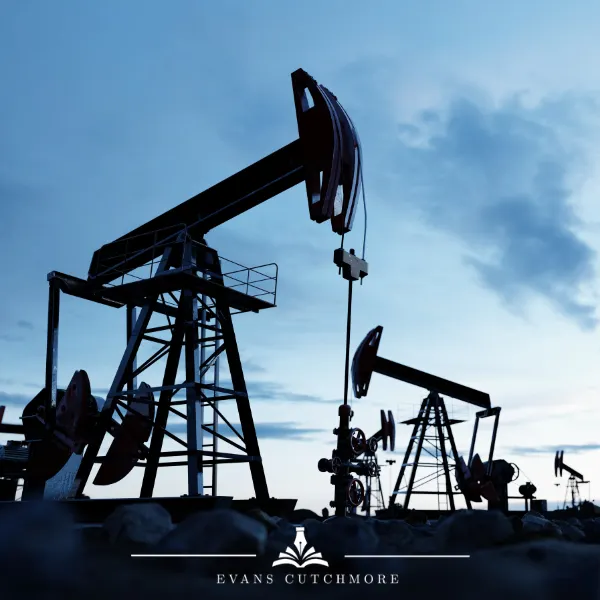
Somewhere in Louisiana right now, a family opens an envelope and finds the same number that has been arriving for decades. A hundred dollars. Maybe less. The well on the old family land is still pumping, the company is still selling what comes up, and the check has not moved in thirty years.
That flat, unchanging number is worth pausing on, because a real production royalty almost never stays still. It rises and falls every month with how much a well produces and what oil and gas sell for. A payment that never changes is usually something else entirely, and the difference between those two things can be the difference between a fair deal and a family that never understood what it signed away.
This is not a story about one family. It is a story about a machine that runs quietly across the state, built out of old contracts, lost paperwork, and a gap in knowledge that almost always favors the company on the other side of the table.
A right you cannot see
The first thing to understand is that in Louisiana, owning land and owning what lies beneath it are two different things.
You can own the surface, the part you farm or build on or walk across, while someone else owns the right to the oil, gas, and minerals underneath. That underground right can be sold or leased separately, and once it is separated from the land, it can drift into hands the family never meets. Louisiana treats this underground right in an unusual way. You cannot truly own oil and gas "in place," because the law treats them as things that move. What you own is the right to go get them, and that right, when it is carved off from the land, behaves like a servitude that can expire.
That single legal quirk, which we will come back to, is the reason so many families lose the thread of what they actually hold.
The math behind a small check
When a family sees a modest royalty check, the honest answer to "were they cheated" is: it depends, and the size of the check alone cannot tell you. Four things determine what lands in that envelope.
The royalty fraction in the lease. For much of the twentieth century, the standard royalty was one-eighth, meaning the landowner kept 12.5 percent of the value of production and the company kept the rest. Newer leases commonly pay one-fifth or one-fourth. A family still bound by a lease their grandparents signed can earn a fraction of what a neighbor with a modern lease earns from an identical well.
How many people the money is split among. Land passed down without a will gets divided among every heir, and then their heirs, until a single mineral interest is sliced into dozens of small shares. Each envelope shrinks accordingly, even when the well is productive.
What the well actually produces. A tired well at the end of its life pays little because it yields little. A small check from a low-producing well is not evidence of anything except a small well.
Whether the payment is even a royalty at all. This is the one most families never question. A steady, unchanging payment is often not a share of production but surface rent, a flat fee for letting a rig, tank, or pipeline sit on the land. If a family was collecting surface rent while the minerals beneath them produced real money that flowed to someone else, that is a very different arrangement than the one they believed they had.
When the paperwork gets cloudy
Here is where the machine does its quietest work.
When land passes down through generations without a clear will, the deed often still carries the name of someone who died long ago. Ownership becomes shared among a widening group of relatives, none of whom holds clean, marketable title to their piece. Lawyers call this heirs' property, and it is common across the rural South.
Heirs' property is a weak position from which to negotiate anything. Families in this situation cannot easily sell, borrow against, or lease their land on strong terms, because no one can prove clean ownership of a defined share. When a company comes to lease the minerals, it is dealing with people who may not have their own attorney, may not know what a fair royalty looks like, and may not even be certain what they own. The imbalance is built in before anyone signs.
This is also where a hard truth sits, and it deserves to be stated plainly rather than avoided. These barriers have not fallen evenly. The U.S. Department of Agriculture has called heirs' property the leading cause of involuntary Black land loss, tied to a steep decline in Black-owned farmland over the last century. The unfair terms in an old lease were rarely written to target anyone by name. The unequal access to lawyers, to information, and to clear title was the real mechanism, and in the South it fell hardest on Black landowning families. That is one thread in this story. It is not the whole cloth, because families of every background have been caught in the same old leases and the same lost paperwork.
Louisiana's ten-year clock
Now back to that legal quirk, because it may be the single most useful thing a Louisiana family can learn.
When mineral rights are separated from the land, they do not last forever on their own. Under Louisiana law, a mineral servitude generally expires after ten years if no one uses it, meaning no drilling and no production. When it expires, the right snaps back to whoever owns the land.
Read that again, because it cuts both ways. A family may believe they lost their minerals generations ago when in fact the right quietly reverted to them. Another family may believe they still hold minerals that expired long before they were born. Very few people track this clock, and companies and landmen understand it far better than the families do. The gap in knowledge is the whole game.
How to find out what you actually own
None of this has to stay a mystery, and this is the part worth clipping and saving. In Louisiana, the records are public, and you can trace most of the story yourself without hiring anyone.
Start with the parish assessor. Your parish assessor's online property viewer will show you the parcels, the acreage, the owners of record, and often whether minerals are being assessed. It costs nothing and takes minutes.
Pull the well's production from SONRIS. The state's public database, at sonris.com, run by the Department of Energy and Natural Resources, lets you look up any well by location or operator and read its month-by-month production going back decades. This is the number that matters most. If a well produced real volume for years while a family received a flat, tiny check, that gap is the whole question. The database interface was rebuilt in late 2025, so ignore older tutorials that no longer match the screens.
Get the lease and the succession from the clerk of court. Your parish clerk of court holds the recorded mineral lease, which shows the royalty fraction and whether the money is a royalty or a rental, along with the succession and conveyance records that show how the land came down through the family. These documents settle most of what the check stub cannot.
Not every small check is a wrong
It is worth saying clearly, because it is what separates careful reporting from a grievance. Not every small royalty check means a family was cheated. Sometimes the well is simply old and nearly dry. Sometimes the interest was honestly split among many heirs. Sometimes the modest number is exactly right.
But sometimes it is not, and the only way to know the difference is to look at the records rather than the feeling. The families who look almost always learn something they did not know.
How to follow this
I am researching how Louisiana families came to hold, lease, and sometimes lose the value of the minerals beneath their land, and how much of that value they ever understood. If your family has received oil, gas, or timber royalties for generations, or believes an ancestor signed a lease they did not fully understand, I want to hear from you. Your experience does not have to be published to help map the larger pattern.
Reach me through Evans Cutchmore. What you know may be a piece of a much bigger story.
Kim M. Braud is the Founder & Editor of Evans Cutchmore Press, an independent newsroom covering Louisiana and the Gulf South. Her reporting focuses on government accountability, infrastructure, business, culture, and the public policies that shape communities. Her work combines investigative journalism, public records research, and documentary storytelling.
© 2026 Evans Cutchmore Press. All rights reserved.